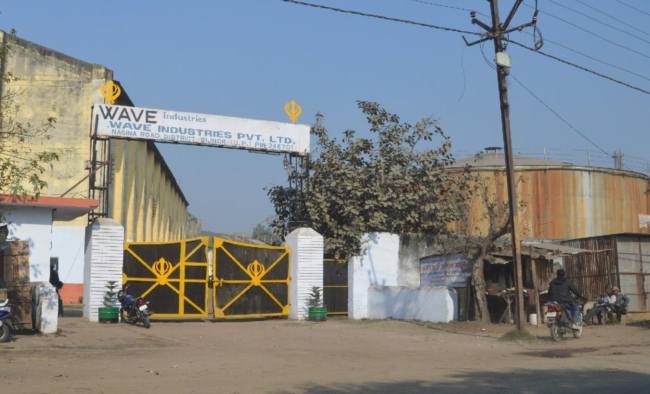
A woman in Uttar Pradesh’s Hapur was rushed to hospital after allegedly consuming a corrosive substance from a bottle sold as packaged drinking water. Police have launched an investigation and are examining CCTV footage to determine how the suspected mix-up occurred.
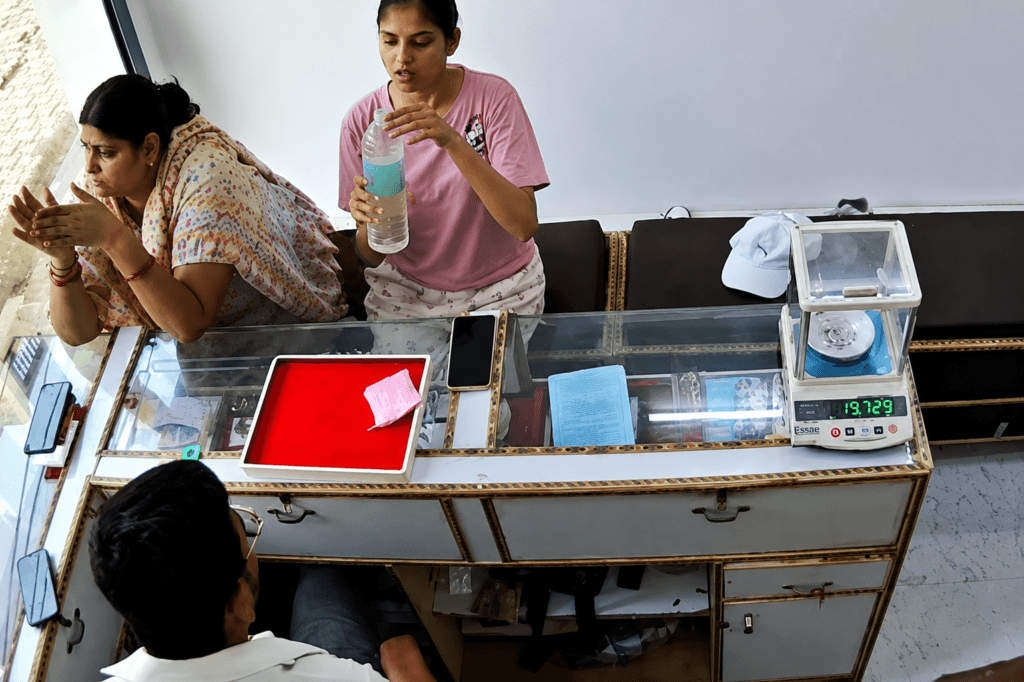
Image from the CCTV
A shocking incident in Uttar Pradesh’s Hapur district has raised serious concerns over consumer safety after a young woman allegedly fell ill after drinking a liquid believed to be acid from a bottle sold as packaged drinking water. The incident occurred in Arjun Nagar, where the woman purchased what appeared to be a sealed bottle of drinking water from a local shop and fell seriously ill shortly afterward.
The family said the woman took a sip and immediately felt a burning sensation in her mouth and throat. She immediately complained of severe pain and soon after fell down. Her family hurried her to a nearby hospital and doctors began emergency treatment.
In the light of this disturbing case, the Hapur Police are now investigating whether there was some corrosive chemical in the bottle or something else. Officers have recovered the bottle and spoken to witnesses and are reviewing CCTV footage from shops in the area in a bid to establish what happened.
Officials have not yet identified exactly what was in the bottle. Forensic testing is expected to determine whether the substance was acid or some other dangerous chemical. Investigators have asked the public not to speculate on the incident until laboratory reports are available.
What Happened in Hapur?
The incident reportedly took place in Hapur’s Arjun Nagar locality when the girl bought what she thought was packaged drinking water from a shop nearby.
The preliminary information suggests that the bottle appeared to be like commercially available drinking water sold across India. She opened the bottle, took a sip and felt immediate pain, burning and difficulty swallowing, she claims.
Family members quickly knew something was desperately wrong and rushed her to the hospital for treatment.
Medical personnel started emergency treatment and the police were informed about the unusual circumstances of the incident.
Officials have not released the identity of the victim due to the ongoing investigation and privacy concerns.
Police Investigation Underway
Soon after getting the information, Hapur Police reached the spot and started a detailed inquiry.
The suspected bottle has been taken as evidence by investigators and sent for forensic examination to find the chemical composition of the liquid inside it.
Police teams are also reviewing the CCTV footage installed near the shop and surrounding areas to understand how the bottle was sent to the store and whether it was deliberately tampered with.
The authorities have questioned the shop owner, staff, suppliers and others associated with the distribution chain.
It is not yet known whether the incident was caused by accidental contamination, improper storage, negligence or intentional criminal activity, investigators have said.
Officials have asked the public to be patient until scientific evidence is available.
Also read: Agra Woman Arrested After Husband’s Murder: 45-Day ‘Missing’ Story Ends in Shocking Crime Twist
Could It Be a Packaging Mix-Up?
Investigators are looking into several possibilities, including a packaging mix-up somewhere in the supply chain.
Sometimes industrial chemicals and cleaning solutions are stored in plastic bottles during transportation or handling, especially in unregulated environments. Such containers can inadvertently appear to be bottled drinking water if not handled properly with safety procedures.
But the authorities have not confirmed if that was the case in Hapur.
The possibility that the bottle itself may have been tampered with after it left the manufacturer is also being explored.
They will also likely test the bottle to see whether it was a genuine branded product or a counterfeit package designed to look like a well-known drinking water brand.
The final forensic report should provide key answers.”
Medical Condition of the Victim
The woman was rushed to hospital with suspected chemical burns to her mouth and digestive tract, hospital sources said.
Doctors are conducting the necessary diagnostic tests and continue to monitor her condition.
Medical experts say that drinking corrosive substances can cause serious internal injuries, depending on the chemical, how much was ingested and how quickly treatment is started.
Early medical intervention often helps to minimize long-term complications.
Her family is still at her side, and authorities have not released any other medical information on her condition.
Statements from Authorities
Police officials say an investigation is underway and have promised the public they are looking at all possible angles.
CCTV footage is being analyzed, and forensic experts are examining the bottle seized to determine the exact nature of the liquid, an investigating officer said.
Officials also emphasized no conclusions will be drawn until laboratory analysis is done.
Consumer safety experts say the key to preventing similar events is to uphold proper packaging standards and to ensure product traceability.
They have also emphasized the need to preserve evidence where suspected cases of contamination of food or beverage are detected.
Background
India has seen the occasional reported case of suspected contamination of packaged food and beverages, though most of the cases are later found to be of counterfeit products, storage errors or isolated cases and not manufacturing defects.
Packaged drinking water industry is regulated as per standards set by the Bureau of Indian Standards (BIS) and the Food Safety and Standards Authority of India (FSSAI).
Licensed manufacturers must adhere to strict hygiene, quality control, bottling and packaging procedures before products are sent to market.
However, from time to time, the authorities have carried out raids against illegal counterfeit packaged water units in several states.
Such incidents highlight the need to buy products from authorized retailers and check seals, labels, manufacturing dates and certification marks before consumption.
Agreed Timeline of Events
Preliminary reports said that the woman bought a sealed drinking water bottle from a local shop in the Arjun Nagar area of Hapur. She complained of severe burning and discomfort shortly after taking a sip and was rushed to hospital by family members. Police were on the scene shortly after; they took the bottle and questioned the shop owner and started an investigation. Forensic experts are examining the contents of the bottle to see if it contained acid or another corrosive substance, while CCTV footage from nearby businesses is also being reviewed.
Why This Matters
The Hapur incident has caused widespread concern since packaged drinking water is one of the safest consumer products.
If investigators eventually conclude that a corrosive chemical was inside the bottle, which was labeled as drinking water, serious questions will be raised about handling of products, safety in the supply chain, counterfeit packaging and retail quality control.
Simultaneously, the investigation emphasizes the need to avoid premature conclusions.
This is a very important issue because public confidence in packaged food and beverage safety depends on transparent investigations based on scientific evidence, not speculation.
Consumers deserve accountability and accurate information.
India Angle
Packaged drinking water has become an essential commodity in India, especially during summer months, railway travel, bus journeys, religious events and tourist destinations.
Millions of Indians buy bottled water every day without a second thought because it is widely seen as safer than untreated water.
The Hapur incident should remind the authorities that they need to keep a watch on counterfeit products and beef up inspections across manufacturing, transportation, wholesale distribution and retail outlets.
Consumers can also take steps to protect themselves by checking bottle seals for proper closure, making sure labels look authentic, checking manufacturing details and avoiding suspiciously damaged packaging.
The incident highlights the need for effective food safety enforcement under India’s consumer protection framework.
Analysis
From a journalism point of view, the Hapur case requires responsible reporting in particular.
Early reports describe the liquid as a suspected acid, but forensic testing has yet to officially confirm what the substance was actually.
It is therefore necessary to distinguish between the claims of family members, the preliminary findings of the police and scientifically established facts.
But as a news writer, accuracy should always trump sensationalism.
If the investigation ultimately determines deliberate tampering or fake packaging, the case may result in broader regulatory action targeting unsafe products.
But if laboratory findings suggest another explanation, the reporting should highlight those findings with equal prominence.
Good journalism takes time for the investigators to do their job. The story also covered by India today
What Happens Next?
Police are expected to wait for the forensic lab report before deciding whether to broaden criminal charges.
Detectives will still be looking at CCTV footage, interviewing witnesses, tracing the bottle’s distribution chain and checking for similar products in circulation.
If there is evidence of counterfeit production or deliberate interference, authorities might conduct wider inspections and raids against suppliers connected to the case.
Departments for consumer safety could also increase their market surveillance to try to prevent similar incidents.
Doctors will keep watching the woman’s recovery while investigators will liaise with medical experts on evidence relevant to the investigation.
Conclusion
The reported sale of a corrosive substance in a bottle resembling packaged drinking water has left Hapur residents in shock and has drawn national attention to consumer safety and product authenticity. The young woman is still in hospital but investigators are trying to establish exactly what happened and whether there was any element of criminal negligence or deliberate tampering.
The case additionally emphasizes the need to investigate scientifically before making conclusions. Laboratory tests, CCTV footage and evidence gathered by police will ultimately determine whether the bottle contained acid, another dangerous substance or some other explanation.
Until then, this incident is a good reminder to authorities, manufacturers, retailers and consumers alike to stay vigilant about product safety. To maintain public confidence in critical consumer products, we need strong quality control, vigilant enforcement and transparent investigations when serious claims arise.