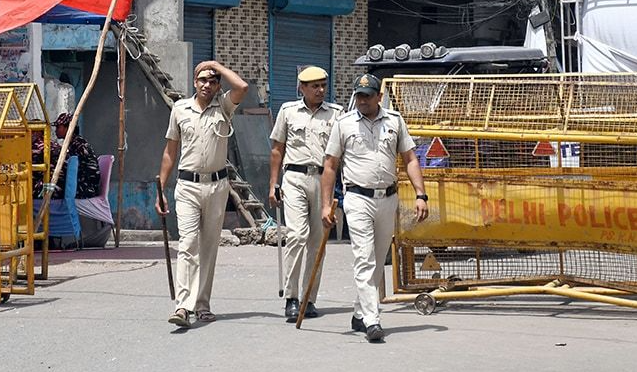
Ankit reportedly slipped while crossing a bridge near Priyanka Camp in Madanpur Khadar during heavy rain; his family has appealed for intensified rescue efforts as teams search the drain and adjoining areas.
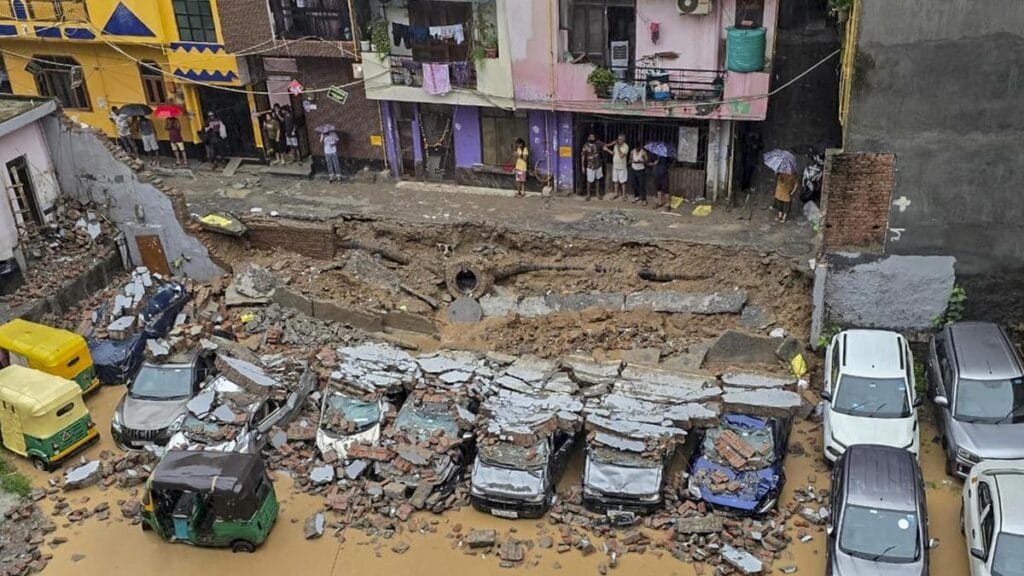
This image is only for illustrations. Image Credit: The Hindu
For 18-year-old Ankit, Friday evening began as a normal journey home after work in Noida. He was returning to his family in southeast Delhi when heavy rain turned a familiar route near Priyanka Camp into a dangerous stretch of fast-moving water.
Ankit reportedly slipped while attempting to cross a small bridge near an open drain in the Priyanka Camp area under Sarita Vihar police station limits. The drain, which residents said was usually not very deep, had swollen after torrential rainfall. The strong current carried him away within moments.
The incident occurred around 8 pm on Friday, August 7. His friend Manish and local residents tried to help, but the flow was too powerful for them to reach him safely. Police, fire-service teams, divers and DDMA personnel began searching shortly afterwards.
The latest available reports said that Ankit had not been traced despite overnight and daytime search operations. Some initial accounts referred to the possibility of his body being recovered nearly a day later, but that development was not confirmed by the latest police updates.
How the accident happened
According to police and family members, Ankit had completed his shift at A1 Silverstein Service Measurement in Sector 62, Noida, and was travelling home. He was the elder of two sons and worked as a pantry employee.
He was reportedly accompanied by his friend Manish when they reached the area near the Priyanka Camp drain in Madanpur Khadar. Heavy rain had caused water to accumulate on the road and bridge, reducing visibility and making the surface slippery.
The drain’s water level had risen rapidly. Although residents said the drain was normally manageable, the rainfall had created a strong current that made crossing the bridge dangerous. This story was also covered by TheHindu.
Ankit lost his balance and fell into the drain. His friend and nearby residents attempted to locate him, but the current carried him away almost immediately.
The accident shows how open drains can become invisible hazards during heavy rain. Water may cover the edge of a drain, bridge or road gap, making it difficult for pedestrians to understand where the safe path ends.
Yeh issue kaafi important hai because open drains become deadly when heavy rainfall removes the visible distinction between a road, a bridge and a water channel.
Search and rescue operation
Ankit’s father, Sunil, said he called the police after receiving information about the incident. Police personnel and divers reached the location on Friday night, but the search could not continue for long because of darkness, rain and strong water flow.
Officials told the family that the operation would resume the following morning. More than 12 hours after the incident, teams from Delhi Police, Delhi Fire Service, DDMA and the National Disaster Response Force were involved in the search.
The operation has been difficult because of:
Fast-moving water.
Poor visibility.
Debris inside the drain.
Continuous or intermittent rain.
Narrow access points.
The possibility that the current carried Ankit downstream.
Multiple connecting drains and channels.
Rescue teams are searching the drain, downstream areas and nearby outlets. Divers may be required to enter sections where water flow becomes slower, but such operations carry significant risk.
The family has appealed to the administration to intensify the search and ensure that all possible stretches of the drain are examined.
Family’s appeal
Ankit’s father has been seeking help from officials and rescue agencies. The family wants the operation to continue until there is a confirmed outcome.
For relatives, the uncertainty is extremely painful. They do not know whether to hope for rescue, prepare for the worst or wait for information from the authorities.
The family has also raised questions about the open drain near the bridge. Local residents said the problem had been reported to civic authorities several times, but no permanent safety measures were put in place.
The family’s account highlights the gap between emergency response and prevention. Rescue teams may arrive after an accident, but proper barriers, warning signs, lighting and drainage maintenance could reduce the risk of such incidents.
Local residents raise safety concerns.
Bhagwan Jha, the colony’s Up-Pradhan, said residents had repeatedly raised concerns about the open drain with authorities. He said he was present when Ankit fell.
“I was there when Ankit fell into the drain. I was holding his bag and phone. He was attempting to cross the bridge. Nobody could have done anything at that time,” Jha said.
His statement underlines the force of the water. Even people who witnessed the incident could not safely enter the drain or reach Ankit.
A bridge over an open drain should have railings, adequate lighting and visible warning signs, particularly in a densely populated locality. During heavy rain, authorities should also barricade dangerous crossings and divert pedestrians to safer routes.
The absence of such precautions can turn a known infrastructure problem into a life-threatening emergency.
Delhi rain and wider disruption
The incident occurred as torrential rain affected Delhi-NCR on Friday. Several parts of the capital experienced waterlogging, traffic congestion and emergency situations.
Some of the worst flooding was reported on MB Road near the Air Force Station, where water levels reportedly rose to nearly four feet. Vehicles became stranded, while motorcycles and autorickshaws broke down after entering flooded stretches.
Air Force trucks assisted movement in some inundated areas, while civic and emergency teams dealt with waterlogged roads and other rain-related incidents.
The India Meteorological Department had forecast moderate to heavy rainfall over Delhi before a likely reduction in intensity from Saturday.
Background and context
Delhi’s drainage system has repeatedly come under scrutiny during the monsoon. Open drains, uncovered manholes and low-lying roads become particularly dangerous when heavy rain causes water to rise rapidly.
In many unauthorised colonies and peripheral settlements, residents use narrow bridges or makeshift crossings over drains. These routes may be essential for daily travel, but they often lack railings, lighting or warning signs.
The Priyanka Camp area is connected to several densely populated neighbourhoods. Many residents commute to Noida and other parts of the National Capital Region for work. People returning during evening rainfall may have little choice but to use unsafe crossings.
The problem is also connected to urban planning. Drains are often constructed to carry storm water, but when they are open, poorly maintained or blocked by waste, they pose risks to residents.
Timeline
Friday evening: Heavy rain lashes Delhi-NCR and water levels rise in local drains.
Around 8 pm: Ankit and his friend Manish reportedly reach the Priyanka Camp drain near a bridge.
Shortly afterwards: Ankit slips and falls into the fast-moving water.
Around 8:31 pm and 8:54 pm: Police receive calls reporting that a young man has been swept away.
Friday night: Police, divers, fire personnel and DDMA teams begin the search.
Saturday: Search continues for more than 12 hours amid strong currents, rain and debris.
Latest update: Police and rescue agencies continue efforts; Ankit’s whereabouts had not been officially confirmed in the latest reports.
Why This Matters
This matters because Ankit’s disappearance was not caused by an extraordinary natural disaster alone. It occurred near an open drain and a crossing used by residents during daily travel.
The tragedy raises questions about whether the area had warning signs, protective barriers, adequate lighting and a safe alternative crossing. If residents had already complained about the drain, authorities will need to explain why corrective work was not completed before the monsoon.
It also matters for workers commuting between Delhi and Noida. Many young people travel long distances each day and return home during rain, darkness and traffic congestion. A route that appears safe in normal conditions can become dangerous within minutes.
For Ankit’s family, the impact is devastating. They are dealing with uncertainty, emotional distress and the practical challenge of coordinating with several rescue agencies.
In simple Hinglish, baarish ko blame karke responsibility khatam nahi ho sakti; unsafe drain aur missing safety measures ka bhi jawab chahiye.
India angle
For Indian readers, the incident reflects a wider problem across urban India. Every monsoon season brings reports of people falling into open drains, flooded pits and uncovered manholes.
Cities are expanding rapidly, but drainage systems and pedestrian safety infrastructure are not keeping pace. Peripheral settlements and informal colonies are often the most vulnerable because they depend on informal bridges and unprotected pathways.
The accident also highlights the need for coordinated disaster response. Police, fire services, municipal agencies and disaster-management teams must share real-time information during flooding.
Preventive measures could include:
Covering or barricading open drains.
Installing railings on pedestrian bridges.
Marking dangerous crossings.
Deploying flood-response teams before severe rain.
Closing unsafe routes during intense rainfall.
Creating emergency helplines and public alerts.
Mapping drains and downstream channels for rescue operations.
The issue is not limited to Delhi. Similar risks exist in Mumbai, Bengaluru, Hyderabad, Kolkata, Patna and other cities where storm-water drains pass through crowded settlements.
Analysis
At the same time, authorities must investigate the infrastructure around the drain. If local residents had repeatedly complained, records should show when those complaints were received and what action was taken.
The city should not wait for another accident before installing barriers and signs. During heavy rain, drains can become dangerous even if they are shallow during normal weather.
There is also a communication issue. Authorities should quickly inform residents about dangerous crossings and close routes where the water current is strong. A warning issued before the incident may prevent people from attempting to cross.
The rescue operation must remain the immediate priority, but a post-incident safety audit should follow.
What Next
The immediate next step is the continuation of the search by police, DDMA, Delhi Fire Service, NDRF personnel and divers. Teams will inspect downstream sections, debris points and connected drains.
The family is likely to receive updates from the police and disaster-management authorities as the search progresses. If Ankit is located, officials will need to follow identification and post-mortem procedures before handing over the body to the family.
Civic agencies should also inspect the drain, bridge and nearby crossings. Temporary barricades, warning signs and lighting may be installed to prevent another accident.
Long term, the authorities may need to cover the drain or build a properly protected pedestrian bridge. Drain desilting and regular maintenance should be completed before the next major rainfall spell.
The administration may also review other open drains in Sarita Vihar, Madanpur Khadar, Ali Vihar and nearby colonies to identify similar hazards.
Conclusion
The disappearance of 18-year-old Ankit after he was swept away in a rain-swollen drain near Priyanka Camp has exposed the deadly risks created by open drains and unsafe crossings in Delhi. He was returning home from work in Noida when he slipped near a bridge, and the strong current carried him away within moments.
Rescue teams have been searching for him, but the latest official updates said he had not yet been traced. The family’s appeal for intensified efforts reflects the emotional toll of waiting for an answer.
The incident is a reminder that heavy rain alone does not create every urban tragedy. Poorly protected drains, inadequate warning systems and unsafe pedestrian infrastructure can turn predictable monsoon flooding into a life-threatening event.
The priority now is to locate Ankit and support his family. After that, authorities must address the open drain and ensure that no other worker or resident faces the same danger while simply trying to get home.
Written By A. Jack