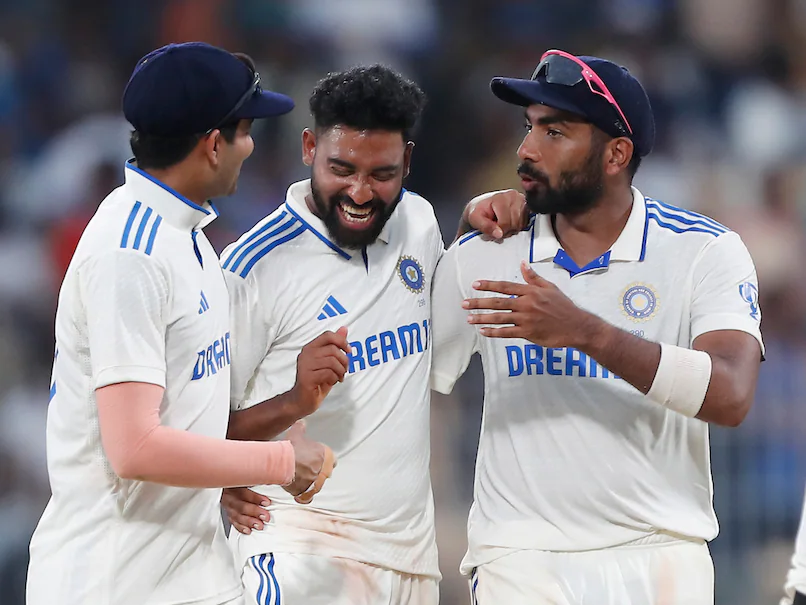
Rishabh Pant’s attacking 66, backed by contributions from Devdutt Padikkal and KL Rahul, helps India build a 371-run lead before Manav Suthar’s double strike leaves Sri Lanka 84/4.
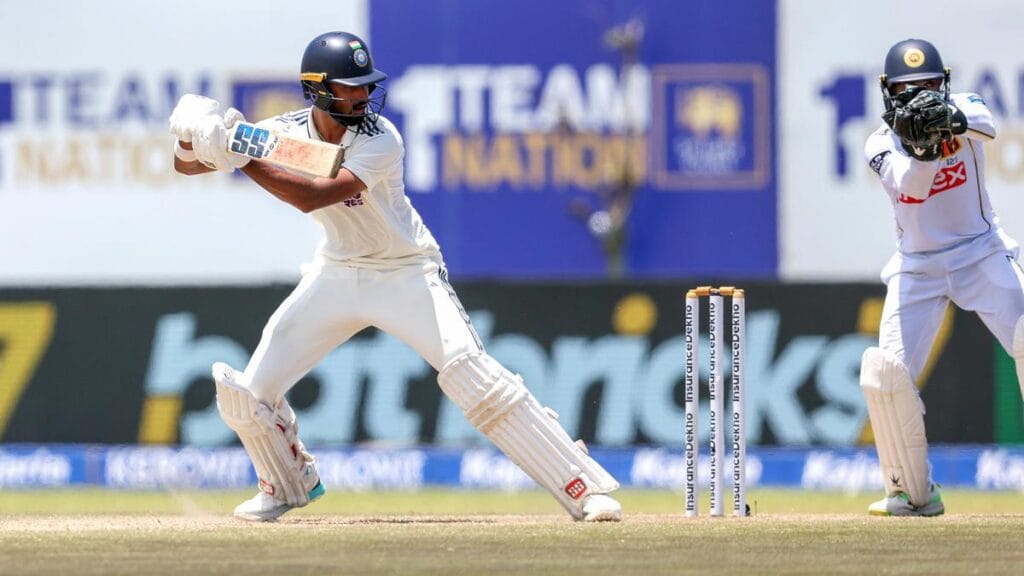
The first Test against Sri Lanka at Galle International Stadium. Image Credit: The Hindu
India moved within six wickets of a series-opening Test victory over Sri Lanka after tightening their grip on the Galle Test on Tuesday, August 18, 2026. Set an imposing target of 372, Sri Lanka finished Day 4 at 84/4, still needing 288 runs on the final day.
India were bowled out for 193 in their second innings, extending their first-innings lead of 178 to an overall advantage of 371. Rishabh Pant’s blistering 66, supported by Devdutt Padikkal’s 44 and KL Rahul’s 35, ensured that the visitors set a target far beyond Sri Lanka’s comfort zone on a deteriorating Galle surface.
The Indian bowlers then produced a disciplined final-session spell. Left-arm spinner Manav Suthar took two wickets, while Mohammed Siraj and Prasidh Krishna claimed one each to leave the hosts in serious trouble.
India’s Second Innings
India began the fourth day with a 178-run lead after dismissing Sri Lanka for 284 in the first innings. The objective was simple: add enough runs quickly, give the bowlers sufficient time, and force Sri Lanka into a daunting fourth-innings chase.
The visitors did not produce a flawless second innings. Sri Lanka’s bowlers, led by Asitha Fernando and Prabath Jayasuriya, struck regularly and made scoring difficult. India lost wickets at intervals and were eventually bowled out for 193 in 48.5 overs.
However, India had already done most of the hard work through their first-innings score of 462. The second innings did not require another monumental total. It required intent, tempo and enough runs to make the final-day chase almost impossible.
That is where Rishabh Pant made the difference.
Pant counterattacked with 66 off 69 balls, hitting eight fours and two sixes. His innings shifted the match decisively in India’s favour by preventing Sri Lanka from quickly rolling through the lower order and keeping the target out of reach. This story was also covered by The Hindu.
The left-hander’s knock was typical Pant: aggressive, unconventional and immensely valuable in match context. When the ball was loose, he attacked. When Sri Lanka tried to squeeze runs with spin, he disrupted their fields and changed the rhythm of the innings.
Pant’s contribution was more important than the raw number suggests. A score in the 150–160 range may have left Sri Lanka with a psychologically manageable chase. His 66 pushed India to 193 and the target to 372—an entirely different proposition at Galle.
Pant also achieved a significant record during the innings, becoming the fastest batter in Test history to reach 100 sixes.
Padikkal and Rahul Provide Useful Support
While Pant supplied the explosive finishing energy, Devdutt Padikkal and KL Rahul gave India the stability needed at the top and middle order.
Padikkal made 44 off 75 balls, including six boundaries. After his first 167 innings, the left-hander again showed composure and strong technique in difficult conditions.
Rahul scored 35 off 47 balls, with two fours and two sixes. His innings was not long, but it was useful because it helped India maintain scoring momentum while protecting the lead they had built through the first innings.
Sri Lanka’s Asitha Fernando was the most successful bowler in the second innings, taking 4/31, while Prabath Jayasuriya took 3/43. The pair ensured India could not run away with the game completely, but by then the visitors had enough in the bank.
Sri Lanka’s Chase Begins Poorly
Sri Lanka had four-plus sessions to chase 372, a target that would require a record fourth-innings effort at Galle. No side has successfully chased such a total at this venue in Test cricket.
The task became tougher almost immediately.
India’s new-ball bowlers used the late-day conditions well. Mohammed Siraj removed one opener, Prasidh Krishna added another wicket, and Manav Suthar then struck twice with his left-arm spin.
Suthar dismissed Lahiru Udara and Pasindu Sooriyabandara, who made his Test debut as a concussion substitute. Sooriyabandara’s introduction to Test cricket could not have been more difficult: he came in under pressure and was dismissed for a first-ball duck.
At stumps, Sri Lanka were 84/4 after 34 overs. Dhananjaya de Silva remained unbeaten on 31, with Kusal Mendis unbeaten at the other end. Their partnership offers the hosts a small chance of survival, but the scoreboard remains heavily tilted in India’s favour.
Sri Lanka do not simply need runs; they need time. With 288 still required and only six wickets left, the hosts must bat for long periods while also resisting a bowling attack that will have spin-friendly conditions on the final day.
Chandimal Injury Adds to Sri Lanka’s Problems
Sri Lanka suffered another setback when Dinesh Chandimal injured his right shoulder while fielding on the boundary earlier in the day. He dived to save two runs and landed awkwardly, requiring medical attention.
Although scans reportedly showed no major structural injury, Chandimal did not pass the concussion assessment and was ruled out of the match.
Pasindu Sooriyabandara replaced him as a concussion substitute and made his Test debut. But his debut was short-lived, as Suthar dismissed him first ball.
The loss of Chandimal is significant. In a difficult final-innings chase, Sri Lanka needed their experienced batters to absorb pressure and guide the middle order. His absence reduces the hosts’ chances of pulling off an unlikely escape.
India’s Bowling Plan Works
India’s strategy across the Test has been clear: build a sizeable lead, use pace early, and let the spinners attack once the pitch begins to deteriorate.
Siraj and Prasidh provided the early breakthroughs. Their role was not merely to take wickets; it was to expose Sri Lanka’s middle order to spin before the ball got too old.
Suthar then delivered the key blows. His two wickets in the final session showed why India selected another left-arm spinner alongside Ravindra Jadeja. At Galle, variation in angle, pace and release point can be decisive, especially when batters are already under scoreboard pressure.
Jadeja did not take a wicket in Sri Lanka’s second innings by stumps, but his control will still be crucial on the final day. The senior all-rounder can build pressure from one end while Suthar attacks from the other.
With the surface expected to offer more turn and uneven bounce, India’s spinners will be favourites to close out the match.
India’s Strong Position Was Built Earlier
India’s dominance in the Test began with their first-innings total of 462. Devdutt Padikkal’s 167, along with strong contributions from other batters, gave the visitors a commanding platform.
Sri Lanka responded with 284, thanks largely to Sonal Dinusha’s century and Niroshan Dickwella’s 80. Their 146-run sixth-wicket stand prevented an outright collapse, but India still secured a valuable 178-run lead.
That first-innings lead is why India could afford to play with freedom in the second innings. Even though they were dismissed for 193, the target of 372 remains monumental in the context of a fourth-innings chase at Galle.
The match now follows a familiar Galle pattern: a large lead, a wearing surface, spinners in the game, and a final-day battle between survival and collapse.
Timeline
India’s first innings: India scores 462, establishing a strong base in the first Test at Galle.
Sri Lanka’s first innings: Sri Lanka are bowled out for 284; India take a 178-run first-innings lead.
Day 4, morning: India resume their second innings with the aim of setting a fourth-innings target beyond Sri Lanka’s reach.
India’s second innings: Devdutt Padikkal scores 44, KL Rahul adds 35 and Rishabh Pant makes a counterattacking 66.
India all out: India are dismissed for 193 in 48.5 overs, setting Sri Lanka a target of 372.
Chandimal injury: Dinesh Chandimal suffers a shoulder injury while fielding and later fails a concussion assessment.
Substitute debut: Pasindu Sooriyabandara replaces Chandimal as a concussion substitute, makes a Test debut and falls for a first-ball duck.
Sri Lanka’s second innings: Siraj and Prasidh take one wicket each; Manav Suthar claims two as Sri Lanka reach 84/4.
End of Day 4: Sri Lanka require 288 more runs; India need six wickets to win and take a 1-0 lead in the two-Test series.
Also Read: Galle Test: India Take 178-Run Lead Despite Dinusha–Dickwella Fightback
Why This Matters
Yeh match kaafi important hai because India are on the verge of taking a 1-0 lead in a two-Test away series.
Series advantage: Winning the first Test would put India in control of the series and reduce pressure heading into the second match.
Record chase challenge: Sri Lanka needs 288 more runs to complete what would be an extraordinary fourth-innings chase at Galle.
Pitch conditions: As the match reaches Day 5, spin and inconsistent bounce are expected to make batting significantly more difficult.
India’s bowling depth: Siraj, Prasidh, Suthar and Jadeja give India multiple wicket-taking options.
Sri Lanka’s setback: Chandimal’s absence weakens Sri Lanka’s batting resources in the most difficult phase of the Test.
For India, the goal is simple: do not let Dhananjaya de Silva and Kusal Mendis settle. For Sri Lanka, survival rather than victory may become the immediate priority.
India Angle
For Indian fans, Pant’s innings is the biggest positive from Day 4. His 66 was not just entertaining; it was match-shaping.
In Asian conditions, teams often face a choice when they have a substantial first-innings lead: bat long and risk losing time, or score quickly and trust the bowlers. Pant’s counterattack allowed India to do both—add critical runs and preserve enough overs to bowl Sri Lanka out.
Padikkal’s second-innings 44 also reinforces his claim as a long-term Test option. After scoring 167 in the first innings, he showed that he can contribute even when conditions are less friendly and the team needs practical runs rather than a headline innings.
Manav Suthar’s double strike is equally important. The young left-arm spinner has now shown that he can make an impact in pressure moments. Agar India ko final day par early wickets milti hain, Suthar could become the decisive bowler in the match.
Analysis
Cricket-wise, India are overwhelming favourites. Sri Lanka’s remaining target is huge, their batting has already lost four wickets, and the pitch is expected to favour spin. But Test cricket has repeatedly shown that final-day pressure can produce unexpected partnerships.
India must avoid trying to force wickets too quickly. The right approach is likely to be disciplined: keep close catchers around the bat, use Jadeja’s control, allow Suthar to attack, and rotate Siraj or Prasidh in short bursts if reverse swing or uneven bounce becomes available.
Sri Lanka’s only realistic path is a long partnership. Dhananjaya de Silva and Kusal Mendis must bat deep into the first session, deny India early wickets and make the visiting bowlers feel the pressure of time. Even then, they face a massive task.
The match is currently India’s to win. Lekin final day ka first hour game ka direction decide karega.
What Next
The final day will begin with Sri Lanka on 84/4, needing 288 more runs to win, while India needs six wickets.
India’s plan: Attack early with spin, use close-in fielders and target the Dhananjaya–Mendis partnership before it becomes significant.
Sri Lanka’s plan: Survive the opening session, reduce risk and focus first on batting time rather than chasing the target rapidly.
Key battle: Manav Suthar versus Sri Lanka’s middle order could decide the contest, especially if the surface begins to turn sharply.
Jadeja factor: Ravindra Jadeja’s control may be essential in creating pressure from one end and forcing mistakes at the other.
Weather watch: Galle saw only a brief rain interruption on Day 4, but weather remains a possible factor on the final day.
Series impact: An Indian win would give the visitors a 1-0 lead in the two-Test series.
Conclusion
India ended Day 4 of the Galle Test in a dominant position. Rishabh Pant’s attacking 66, useful scores from Devdutt Padikkal and KL Rahul, and a disciplined bowling performance helped the visitors set Sri Lanka 372 and reduce them to 84/4.
With Sri Lanka still 288 runs away and without injured Dinesh Chandimal, India has a clear route to victory: take six wickets on the final day.
The hosts will need something extraordinary to survive or chase down the target. India, meanwhile, must stay patient, trust their spinners and finish the job. Ab bas six wickets ki baat hai—and a 1-0 series lead could be within reach.
Written By A. Jack