
A Maharashtra FDA raid at Bollywood Cafe in Goregaon Film City has put catering practices on Mumbai shoots under scrutiny, with workers’ union FWICE flagging food quality, hygiene and alleged misuse of caustic soda.
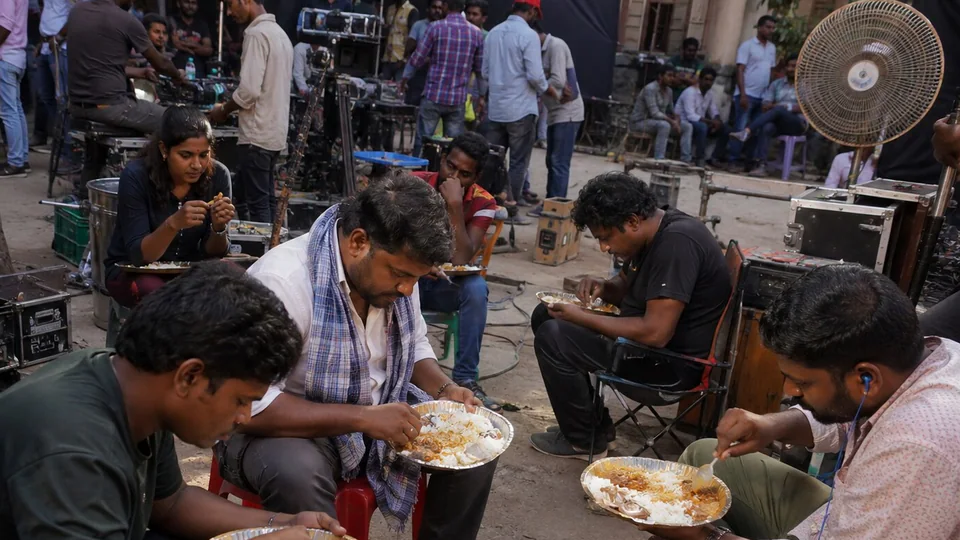
This image is only for illustrations. Image Credit: The Hindustan Times
Mumbai’s film and television industry is facing a fresh food-safety reckoning after the Maharashtra Food and Drug Administration (FDA) raided Bollywood Café in Goregaon’s Film City and reportedly found serious hygiene lapses.
The inspection came days after the Federation of Western India Cine Employees (FWICE) wrote to Maharashtra FDA Commissioner Tukaram Mundhe, raising concerns about food quality and hygiene for the workers, technicians and artistes who rely on set meals during long shooting schedules.
The issue goes far beyond one café. Industry workers say the quality of food often depends on a production’s budget, caterer and location, while many daily-wage employees feel unable to complain because work opportunities are uncertain.
What Triggered the FDA Action
The Maharashtra FDA has been conducting a wider drive against food-safety violations across the state, with inspections covering restaurants, quick-commerce facilities, hotels, clubs, dhabas and other food-serving establishments.
Against that backdrop, the FDA’s Friday raid at Bollywood Café in Film City shifted attention to the entertainment industry’s food ecosystem. The café is located in Goregaon’s Film City, a major production hub where television serials, web shows, advertisements, reality programmes and film shoots are regularly held. This story was also covered by The HindustanTimes.
The raid reportedly found serious hygiene lapses. Although detailed inspection findings have not been publicly specified in the available report, the action has created concern among production houses, caterers and crew members.
FWICE, which represents workers across the Hindi film and television sector, had already written to FDA Commissioner Tukaram Mundhe asking for scrutiny of food served on sets. The union’s intervention reflects complaints that food hygiene, storage and quality are not consistently monitored across productions.
Why Crew Members Fear Speaking Up
FWICE general secretary Ashok Dubey said the raid sends a message to production houses that poor food practices can attract regulatory action. “Log darrenge that raid humare par bhi ho sakti hai,” Dubey said, arguing that fear of inspection may compel productions to improve compliance.
He also highlighted why many workers hesitate to raise food-safety complaints openly: “Crew and daily wage workers’ food safety is a big concern. Woh log khul ke nahin bolenge. Kaam itna kam hai, kaun bolega.”
This is the core of the issue. Film sets are highly hierarchical workplaces. Actors, directors, producers and senior technicians may have separate food arrangements, while junior crew, spot boys, lighting staff, drivers, set workers and daily-wage employees often depend entirely on common catering.
For a worker paid per day or per shift, complaining about stale food, unhygienic kitchens or poor-quality ingredients can feel risky. Many fear being labelled “difficult”, losing future calls or being left out by contractors.
In an industry where employment is often project-based rather than permanent, food safety can become a compromise rather than a workplace right.
Concerns Over Catering and Caustic Soda
FWICE chief adviser Ashoke Pandit said complaints about food quality have been widespread, including concerns over the possible use of caustic soda.
“A lot of people have been complaining about food quality and the use of caustic soda. So, we thought a check here was needed. The entire catering system in the film industry on the shoots needs to be monitored,” Pandit said.
The allegation about caustic soda is serious. Caustic soda, or sodium hydroxide, has legitimate industrial and food-processing uses when handled in controlled conditions, but its improper use in cooked food can be dangerous. The report does not establish that it was found at any specific film set or catering unit; it reflects concerns raised by industry representatives seeking regulatory inspection.
That distinction matters. Allegations require investigation, sampling and laboratory testing before responsibility can be fixed. But the union’s demand for inspections signals that workers want a transparent system rather than relying on informal assurances from caterers.
A safe catering system should include verified ingredients, clean water, protected storage, temperature logs, pest control, hygiene training, medical checks for food handlers, and traceable suppliers. On a busy set, where hundreds of meals may be served in a short time, even a minor lapse can affect a large number of people.
Ground Reality
Technician Mohd Rafiq, who has worked in equipment and lighting for more than three decades, said he has become selective about the projects his team accepts.
“I have stopped sending my team to small-budgeted projects; wahan khaane ki dikkat aati hi hai. Kam ho kaam, but the crew should be safe,” he said.
His observation points to a familiar divide in the industry. Bigger productions may hire established caterers, provide sealed drinking water, arrange separate vegetarian and non-vegetarian food, and maintain better serving infrastructure. Small-budget shoots, however, may look for the cheapest food arrangement, especially when margins are tight.
That does not mean all low-budget projects serve unsafe food, nor that every large production meets standards. But the absence of uniform checks creates a system where quality can vary sharply from one set to another.
Another light technician, GP Dass, presented a more pragmatic view. He said workers are grateful to receive multiple meals during demanding shifts: “Kaun si corporate do se teen baar khaana deti hai? At least in our industry, we’re getting food and can save money to send back home. Nahin khaana, matt khao.”
Dass’s statement captures the difficult reality for many workers. Free meals can be economically important, particularly for migrant labourers and daily-wage staff who send money to families outside Mumbai. But the fact that food is provided should not reduce the expectation that it must be safe, hygienic and nutritious.
Free food is a benefit. Safe food is a basic responsibility.
Maharashtra FDA’s Wider Food-Safety Crackdown
The Film City raid is part of a broader food-safety enforcement drive in Maharashtra. On August 13, the FDA inspected 86 establishments associated with online food delivery and quick-commerce operations across the state. It ordered one unit to stop operations immediately, issued 60 improvement notices and suspended 14 food-business licences.
In another month-long “Safe Food, Safe Maharashtra” drive, inspections between July 14 and August 17 reportedly led to action against hotels, clubs, restaurants, eateries and other establishments for alleged hygiene, storage and temperature-control lapses.
The FDA has also said that citizens can report concerns through its toll-free helpline, 1800-222-365, or through the department’s grievance portal.
FDA Commissioner Tukaram Mundhe has indicated that the enforcement drive is not limited to a single category of establishments. The scrutiny has extended to restaurants, food outlets near schools, quick-commerce dark stores and, now, potentially, catering systems tied to film shoots.
For Mumbai’s film industry, this could mean a shift from informal food arrangements to documented safety compliance.
Timeline
July 14–August 17, 2026: Maharashtra FDA carries out its “Safe Food, Safe Maharashtra” inspection drive across hotels, restaurants, clubs, dhabas and other food establishments.
August 13, 2026: FDA inspects 86 online food delivery and quick-commerce-linked establishments; one unit is told to halt operations, 60 improvement notices are issued, and 14 licences are suspended.
Days before Film City raid: FWICE writes to FDA Commissioner Tukaram Mundhe, raising concerns about food quality and hygiene on film sets.
Friday, August 14, 2026: Maharashtra FDA raids Bollywood Café in Goregaon Film City and reportedly finds serious hygiene lapses.
August 18–19, 2026: Film workers, technicians and union representatives publicly discuss catering concerns, food quality and the need for regular monitoring on shoots.
Expected next phase: FDA may receive more complaints, inspect film-set caterers or issue food-safety directions for production units and studio canteens.
Also Read: After Cockroaches in Mumbai, Rat Found in Blinkit Ice Cream Freezer in Thane: FDA Under Pressure
Why This Matters
Yeh issue kaafi important hai because Mumbai’s film industry feeds thousands of workers every day across studios, outdoor locations, vanity vans and temporary production sites.
High-volume catering: A medium or large shoot may serve meals to hundreds of people in a single day, meaning one hygiene lapse can affect an entire unit.
Worker vulnerability: Daily-wage crew members may not feel free to complain because future employment can depend on production managers and contractors.
Budget inequality: Food standards can vary sharply between big productions and smaller projects, leaving workers on low-budget shoots more exposed to poor catering.
Health and productivity: Unsafe food can lead to food poisoning, dehydration, gastrointestinal illness and lost workdays, affecting workers who may not have paid sick leave.
Industry accountability: A formal monitoring system could make food safety a standard production requirement rather than an optional expense.
The main issue is not luxury. It is dignity and safety. A lighting technician working 12–16 hours should not have to choose between eating unsafe food and losing money by arranging separate meals.
India Angle
Mumbai’s film industry may be glamorous on screen, but much of its workforce is informal or semi-formal. Technicians, spot boys, drivers, junior artists, set carpenters, lightmen, costume assistants, makeup teams, production runners and security staff often work long and unpredictable hours.
This is not unique to Bollywood. Similar realities exist in television, regional cinema, advertising, event production and web-series shoots across India.
In Hyderabad’s Tollywood studios, Chennai’s Kollywood production units, regional film hubs in Kerala, Punjab and Uttar Pradesh, and outdoor shoots across the country, catering is often organised project by project. Standards may depend on the contractor rather than a central system.
The Film City raid could therefore set a wider precedent. If Maharashtra introduces a workable food-safety model for film sets, other states may eventually consider similar guidelines.
Possible standards could include:
Mandatory FSSAI-linked compliance for on-set caterers
Registration of caterers with production houses and studio authorities
Clean water and temperature-controlled food storage
Food-handler hygiene training and health checks
Regular pest control and kitchen cleanliness audits
Separate handling for vegetarian, non-vegetarian and allergen-sensitive food
A confidential complaint system for workers
Random FDA or third-party inspections
Yeh sirf Bollywood ka issue nahi hai. It is a labour-welfare and public-health issue across India’s creative economy.
Analysis
The strongest part of this story is the gap between industry perception and worker reality. On one hand, production teams may say they provide two or three meals daily, valuable support for workers. On the other, free meals are meaningful only if quality and hygiene are dependable.
Ashok Dubey’s remark that workers may stay silent because jobs are scarce is particularly important. It suggests that the absence of complaints cannot be treated as evidence that the system is functioning well.
The FDA’s current drive can create immediate deterrence. “Log darrenge” may be true for a while. But fear alone does not build sustainable compliance. The film industry needs a written, enforceable catering code.
In my view as a news writer, the best long-term solution is a joint framework involving the FDA, FWICE, studio owners, producers’ bodies, catering vendors and health experts. It should focus on routine compliance—not media-driven raids after complaints emerge.
What Next
The Film City raid could lead to several possible developments:
FDA inspections at more studios: Authorities may inspect studio canteens, temporary kitchens and registered caterers supplying major shoots.
FWICE follow-up: The union may submit specific complaints, seek inspections at production units and demand formal food-safety guidelines.
Catering audits: Production houses could begin asking caterers for FSSAI documentation, hygiene certificates, menu details and storage records.
Food sampling: If allegations around unsafe additives or poor-quality ingredients persist, the FDA may collect samples for laboratory testing.
Worker helpline: A confidential reporting mechanism could encourage crew members to flag unsafe food without fear of losing work.
Contractual safeguards: Food safety may be added to production contracts, call-sheet checklists and studio permissions.
Public scrutiny: Actors, production houses and studios could face growing pressure to disclose how food is procured and monitored on their sets.
Conclusion
The FDA raid at Bollywood Café in Goregaon Film City has opened a much-needed conversation about the food served to Mumbai’s vast film workforce.
The concerns raised by FWICE—poor quality food, hygiene lapses, the alleged misuse of caustic soda and workers’ fear of speaking up—show that the issue cannot be dismissed as a minor catering complaint.
Food may be a daily “set deal”, but it should never be a forced compromise. Workers who make Mumbai’s entertainment industry run deserve meals that are clean, safe and fit for long working days.
The raid may be only the beginning. Ab asli test yeh hoga ki kya FDA, production houses and unions milkar aisa system banate hain jahan food safety check kisi complaint ya viral incident ke baad nahi, har shoot par routine practice ho.
Written By A. Jack