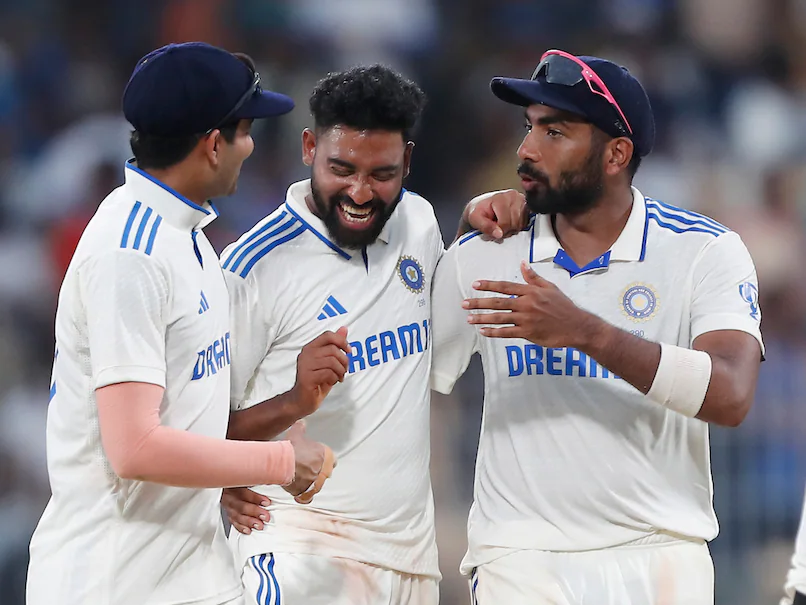
Arshdeep Singh provided an early breakthrough for India, dismissing Jos Buttler, but England soon grabbed the initiative and held onto it. India were outplayed in all the three phases of the match with wides and no balls and fielding errors piling up.
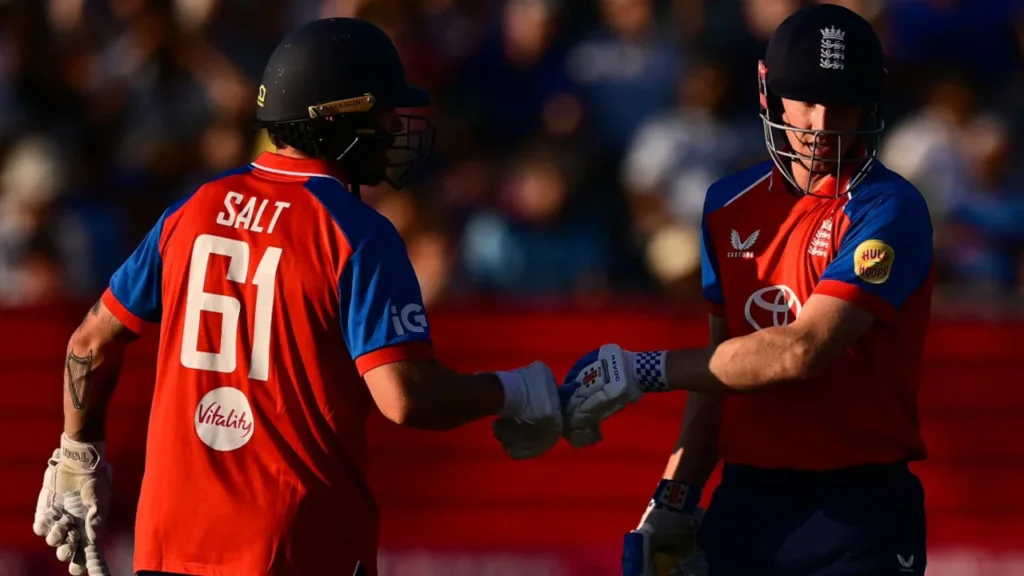
England’s Harry Brook and Phil Salt celebrate during a dominant chase against India in the fourth T20I, sealing a 9-wicket win and series triumph. Image Credit: NDTV
England vs India 4th T20I Highlights: India’s disappointing night in the fourth T20I ended with a crushing 9-wicket loss to England, a result that gave the hosts a historic series win and exposed several cracks in India’s performance. On a surface where India had posted 159 to challenge England, the visitors looked flat, imprecise and short of intensity as England chased down the target with ease. The result was not just a defeat — it was a one-sided lesson in discipline, execution and pressure handling.
Arshdeep Singh briefly raised hopes by removing Jos Buttler early, but that good start quickly faded as Harry Brook and Phil Salt took charge. India’s bowlers kept leaking extras, the fielding slipped badly, and England made sure the chase never became uncomfortable. Yeh, defeat kaafi disappointing thi because India were never really in the game after the first few overs.
What Happened
India’s innings had earlier produced a target of 159, which should have been competitive if the bowling unit had executed properly. But once England began their chase, the match tilted sharply in the hosts’ favour. Arshdeep Singh struck early by dismissing Jos Buttler, and for a brief moment India looked sharp and alert. After that, however, the game changed quickly. This story was also covered By the IndianExpress.
England captain Harry Brook attacked the bowlers aggressively and found strong support from Phil Salt, who helped keep the scoreboard moving at a steady pace. India’s bowling lacked rhythm, and the visitors repeatedly gave away no-balls and wides. Those extras not only added runs but also reduced pressure on England’s batters, who were free to play with confidence.
Fielding mistakes made matters worse. In T20 cricket, every small error can change the match, and India made too many of them. Instead of building pressure, the fielding group allowed England to remain in control throughout the chase. By the final stage of the innings, India’s body language had already dropped. The clearest sign of surrender was when they kept the field back and allowed England to take a single when only one run was needed to win. That moment summed up the match perfectly.
Why India Lost So Heavily
India’s defeat was not caused by one bad spell alone. It was a combination of poor bowling discipline, weak fielding and a lack of intensity once England gained momentum. The biggest problem was the number of extras. No-balls and wides are especially costly in T20 cricket because they gift away runs while also stretching the bowler’s nerves and rhythm.
Another issue was the inability to control England’s top-order batters after Buttler’s dismissal. England did not need a long period to settle. Once Brook began counterattacking and Salt kept rotating strikes, India lost control of the tempo. That is often where T20 matches are won or lost — not just by wickets, but by whether a team can stop a partnership from building confidence.
India also appeared sloppy in the field. Dropped intensity, poor alignment and hesitation can all make a chase easier than it should be. When a target of 159 is chased down with 9 wickets in hand, it usually means the bowling side never created enough doubt. That was the case here.
Brook and Salt Take Charge
Harry Brook played the role of aggressor brilliantly. Instead of waiting for India to dictate terms, he forced the bowlers onto the back foot. That is a classic T20 approach: attack early, punish loose deliveries and prevent the chase from becoming tense. His innings helped England keep the required rate under control and removed any sense of urgency.
Phil Salt’s support was equally important. A chase is rarely finished by one batter alone, and Salt ensured that England’s innings remained steady even as Brook accelerated. The pair worked in tandem, making India’s attack look increasingly toothless. Once the partnership settled, the result felt inevitable.
This was also a statement win for England. A chase like this, completed with such authority, reflects confidence in the batting order and calmness under pressure. For the hosts, it was not just about winning — it was about winning convincingly.
Background and Context
India and England have had a long-standing T20 rivalry, often marked by high-scoring games, tactical shifts and strong individual performances. Series between the two sides usually attract attention because both teams have explosive batters and quality bowling units. That is why this result stands out so sharply. India were expected to compete strongly, but England controlled the game from the middle overs onwards.
The fourth T20I became especially important because it carried series implications. England were chasing a win that would seal the contest, and India needed a disciplined performance to stay alive. Instead, the visitors produced one of their sloppier outings of the series. In cricket, especially in a short format, momentum can swing fast. Once India lost early control, there was little chance to recover.
This result also feeds into a wider conversation about India’s consistency in away or pressure games. The team often has enough talent to compete, but execution under stress remains the key question. T20 cricket punishes inconsistency more than almost any format, and this match was a clear example of that reality.
Timeline
Early overs: Arshdeep Singh dismisses Jos Buttler and gives India an encouraging start.
Middle phase: Harry Brook counterattacks and Phil Salt supports the chase effectively.
Bowling errors: India concede no-balls and wides, easing pressure on England.
Fielding lapses: India fail to build sustained pressure or force mistakes.
Final overs: England cruise toward the target without genuine resistance.
Match finish: India allow a single when England need just one run, sealing a 9-wicket loss.
Also Read: India vs England 3rd T20I: Gautam Gambhir’s India Suffer Record 125-Run Defeat as England Go 2-0 Up
Why This Matters
This matters because series-defining losses often reveal more than close finishes. A 9-wicket defeat is not just about the scoreline; it points to deeper issues in game awareness, execution and intensity. For India, that means the team management will have to look closely at bowling discipline and fielding standards. Yeh issue kaafi important hai because in international cricket, these small lapses can decide big series.
It also matters because T20 cricket is the format where every ball counts. A team that gives away extras and misses simple fielding chances usually puts itself under pressure very quickly. For fans, such losses are frustrating because they feel avoidable. And when a team like India loses in this manner, the reaction is always stronger because expectations are naturally high.
There is also a broader impact on preparation for future tournaments and high-pressure matches. Games like this show what still needs fixing before major events. If India wants to stay among the best, they cannot afford to be sloppy in fielding and undisciplined with the ball.
India Angle
For Indian cricket fans, this result hurts because it was not a narrow defeat or a one-off collapse. It was a controlled beating in a format where India usually expects to compete strongly. In Hinglish, seedhi baat yeh hai: jab team itni easily chase karwa de, toh fans ke liye disappointment double ho jaati hai.
The match will also spark debate back home about bowling selection, death overs discipline and fielding standards. Indian cricket followers are quick to analyse where things went wrong, and this game gives them several talking points. From no-balls to wide deliveries, the errors were visible and costly. That makes the match especially relevant for an audience that follows every series closely.
The loss is also a reminder that India’s strength on paper does not always guarantee control on the field. Against top teams like England, small mistakes become very expensive. That lesson matters for fans, analysts and players alike.
Analysis
My opinion is that India’s biggest problem was not just that they lost wickets or missed chances. It was that they never made England feel uncomfortable. T20 cricket is often about pressure moments, and England handled those moments better. India, by contrast, looked reactive instead of proactive. That is a worrying sign in a format where initiative usually decides everything.
I also think the visible drop in intensity matters. The moment India began to keep the field back and accept singles near the end, the match was effectively over mentally. That tells us England had already broken the contest open before the final ball. The challenge for India now is to make sure such body-language collapses do not become a pattern.
On the positive side for England, this was the kind of performance that builds belief. They did not just win; they controlled the chase with authority. That kind of momentum can matter a lot in future games too.
What Next
The immediate next step for India will be to review what went wrong in bowling, fielding and match control. The coaching staff will likely want to address the extras, because those are often the easiest runs to prevent. The selectors and team management may also revisit bowling combinations if they believe discipline was the bigger issue.
England, meanwhile, will take confidence from a series win earned in dominant style. A chase completed with such ease usually strengthens team morale and gives batters a clear template for handling pressure. That can be useful heading into the next fixtures or future tours.
For fans, the next conversation will likely centre on whether India can bounce back with a stronger all-round display. If they do, this loss may end up looking like a one-off poor performance. If not, it may be remembered as a warning sign that the side needs sharper execution in crunch moments.
Conclusion
India’s 9-wicket defeat to England in the fourth T20I was a heavy and deserved loss for the visitors, who never looked fully in control after the opening overs. Arshdeep Singh’s early strike offered brief hope, but Harry Brook and Phil Salt turned the chase into a one-sided affair as India’s bowling errors and fielding lapses piled up. England’s historic series win was built on discipline, composure and aggressive batting, while India were left to reflect on a sloppy performance that never matched the occasion. For the hosts, it was a statement finish. For India, it was a clear reminder that in T20 cricket, focus and execution matter just as much as talent.
Written By A. Jack