
The city’s combined lake storage has soared to 5.98 lakh million litres, sufficient to meet the water requirements of Mumbai till mid-October, officials said. The Vihar and Tulsi lakes have already filled to capacity and started overflowing, but the civic authorities said the restrictions would continue till all the seven lakes overflow consistently.
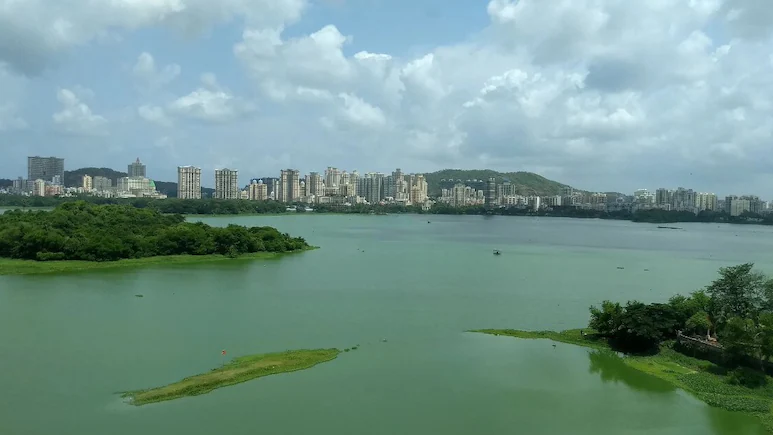
Mumbai’s lake systems have received a strong monsoon refill, with Vihar and Tulsi lakes overflowing as the city’s water stock rises above 41%. Image Credit: NDTV
Mumbai’s water reserves have improved sharply after heavy rainfall over the last 24 hours, bringing relief to a city that had entered the monsoon season with caution over supply levels. On Wednesday, Brihanmumbai Municipal Corporation officials said the combined storage in the city’s seven lakes rose to 41.36%, up from 28.92% the previous day, with the current stock standing at 5.98 lakh million litres. According to officials, this is enough to meet the city’s water requirements until mid-October.
The development is good news for Mumbai residents, but the BMC has made it clear that the existing 10% water cut will continue for now. The logic is simple: while recent rain has improved the picture, the city still wants more certainty before rolling back restrictions. Yeh update is important hai because it shows how quickly Mumbai’s water situation can change during monsoon but also how cautious civic planning remains.
What Happened
The biggest reason behind the sudden improvement is the heavy rainfall Mumbai received over the last 24 hours. That rain added substantial inflow to the city’s lake system, pushing storage levels sharply upward in a short span of time. The combined lake storage climbing from 28.92% to 41.36% in one day reflects how responsive the system is to strong monsoon showers. This story is also covered by NDTV.
Two of the city’s important water sources, Vihar and Tulsi lakes, have already reached full capacity and started overflowing. That is an encouraging sign because it suggests the monsoon has begun replenishing the catchment areas more effectively. However, the full city water picture is still being watched closely because the remaining lakes also need steady inflow before restrictions can be relaxed.
BMC officials said the 10% water cut will continue until all seven lakes overflow and rainfall remains consistent through the rest of July. That decision shows the administration is prioritising supply stability over short-term optimism. In simple terms, the civic body does not want to lift restrictions too early and then face a fresh shortage if rainfall weakens again.
Why the Water Cut Continues
At first glance, the decision may seem surprising. If the lakes are fuller and the stock is enough until mid-October, why continue the cut? The answer lies in risk management. Mumbai has been through enough summers with reduced reservoir levels to know that one good spell of rain does not guarantee a secure season.
The water cut was originally imposed after reservoir levels dropped sharply during summer, and there were also concerns about a weak monsoon due to El Nino conditions. Even though the monsoon has now brought a strong first boost, officials are still looking for a sustained pattern before they restore full supply. That is a practical, precautionary approach rather than an alarmist one.
Another reason is that the water stock figure can change quickly. Rainfall may be heavy in one 24-hour period and then slow down again. By keeping the 10% cut in place, the BMC creates a buffer for the weeks ahead. If rainfall remains steady and the lakes continue to rise, the cut could be withdrawn later in the month.
Background and Context
Mumbai depends on a network of seven lakes for its water supply, and every monsoon the city watches these reservoirs closely. For a city of this size, reservoir health is not just an engineering issue — it is a daily life issue. Cooking, cleaning, commercial activity and public services all depend on a reliable water supply.
The current improvement comes after months of concern about summer depletion. Like many Indian cities, Mumbai had to deal with lower reserves before the monsoon cycle kicked in. That made the early rains especially important this year. When lake levels move upward quickly, it brings relief not only to civic planners but also to households and businesses that rely on stable water distribution.
The situation also shows how monsoon and urban planning are connected. A city can have strong infrastructure, but if rainfall is delayed or weak, reservoir stress increases. On the other hand, when good rain arrives at the right time, it can quickly ease pressure. That is why lake-level updates are watched so closely in Mumbai every year.
Timeline
Summer 2026: Reservoir levels drop, and the BMC imposes a 10% water cut.
Earlier monsoon period: Concerns remain about weak rainfall linked to El Nino conditions.
Last 24 hours: Heavy rain boosts inflow into Mumbai’s lake system.
Wednesday: Combined lake storage rises to 41.36%, or 5.98 lakh million litres.
Same day: Vihar and Tulsi lakes reach 100% and begin overflowing.
July 9 onwards: IMD downgrades Mumbai and nearby regions to a yellow alert.
End of July review: BMC is expected to reassess the water cut based on rainfall and reservoir status.
Weather Outlook
The India Meteorological Department has forecast a reduction in rainfall intensity from Thursday. That means the immediate spike in lake levels may slow if the rain weakens, which is one reason the civic body is being careful. The orange alert for Mumbai and Thane on Wednesday has been downgraded to a yellow alert for July 9.
Palghar and Raigad, which had been under a red alert on Wednesday, have also been shifted to yellow. This downgrade suggests the weather is easing, but it also underlines the uncertainty of monsoon planning. For Mumbai, that means the city cannot assume the water situation is fully secure yet.
This is a classic monsoon balancing act. Too much rain can cause flooding, but too little rain leaves reservoirs stressed. Mumbai is now in the stage where it must keep one eye on the sky and another on the lake gauges.
Why This Matters
This matters because water supply affects every Mumbai resident, from homes and schools to restaurants, hospitals and offices. Even a small cut can change daily routines across the city. That is why a 10% restriction, though modest, still has a visible impact. Yeh issue kaafi important hai because water is not an abstract civic metric — it is a basic necessity.
It also matters because Mumbai is one of India’s most water-sensitive metro cities. When its lakes overflow, people breathe easier. When they fall, anxiety rises quickly. The city’s dependence on monsoon rainfall means every weather update carries real civic weight.
For businesses, stable water supply supports operations and reduces disruption. For households, it means more predictable daily life. And for civic authorities, it is a reminder that reservoir management is as important as road repair or flood control. Water planning is city planning.
India Angle
Across India, major cities are now dealing with the same basic question: how do you manage water when weather patterns are uncertain? Mumbai’s lake update will resonate with readers in other metros because water shortages and seasonal restrictions have become a familiar urban problem. In Hinglish, seedhi baat yeh hai: jab monsoon achha hota hai toh relief milta hai, lekin jab rain uneven ho toh poora system pressure mein aa jaata hai.
Mumbai’s experience is especially relevant because it shows how quickly a city can swing from shortage fear to partial relief. That pattern is common across urban India, where dependence on rainfall remains high despite growing populations and rising demand. The lesson is that water security needs both monsoon luck and long-term planning.
This story also reflects a broader Indian reality: civic services are often tested first by weather. Whether it is water, roads or drainage, cities in India have to prepare for extremes rather than averages. Mumbai’s water update is, therefore, not just a local story — it is a useful urban lesson for the whole country.
Analysis
My opinion is that the BMC’s cautious stance is sensible. Even though the storage has improved dramatically, ending the water cut too soon could create avoidable risk if rainfall weakens in the next few days. A city like Mumbai cannot afford a false sense of security when its water system depends heavily on monsoon performance.
I also think the numbers tell a very interesting story. A rise from 28.92% to 41.36% in one day is significant and reassuring, but it should be read as an early-season gain, not a final victory. The water stock is enough for now, but city planners will want more buffer before declaring relief.
From a reader’s point of view, this is the kind of update people want because it affects their month directly. Water cuts are felt at home in very practical ways. So while the headline is positive, the continuation of the restriction keeps the story grounded in reality.
What Next
The next step will be to watch whether rainfall continues through the rest of July. If the lakes keep filling and all seven overflow consistently, the BMC may review and possibly withdraw the 10% cut. That decision will likely be taken only after a close assessment of reservoir inflow and rainfall patterns.
Residents should also expect more weather-linked updates over the next couple of weeks. If the IMD’s forecast of reduced rainfall intensity holds true, lake levels may rise more slowly. That means the city will remain in a watch-and-wait phase for now.
If the monsoon remains healthy, Mumbai could enter a more comfortable supply phase by the end of the month. But if rainfall slows again, the city may need to preserve restrictions longer. The water outlook is better now, but it is not yet fully settled.
Conclusion
Mumbai’s water stock has received a much-needed boost, crossing 41.36% after heavy rainfall filled the city’s lake system and pushed Vihar and Tulsi to overflow. Still, the BMC has chosen caution and will continue the 10% water cut until all seven lakes overflow and rainfall stays steady. That approach may feel conservative, but it is a practical step in a city where water security can change quickly with the weather. For now, the news is hopeful, but Mumbai will keep watching the monsoon very closely.
Written By A. Jack