
After ending his 16-day hunger strike, JLKM leader Devendra Nath Mahto says the movement will continue until Jharkhand guarantees leak-proof, transparent recruitment; JSSC-CGL cancellation also sparks a counter-protest by selected candidates.
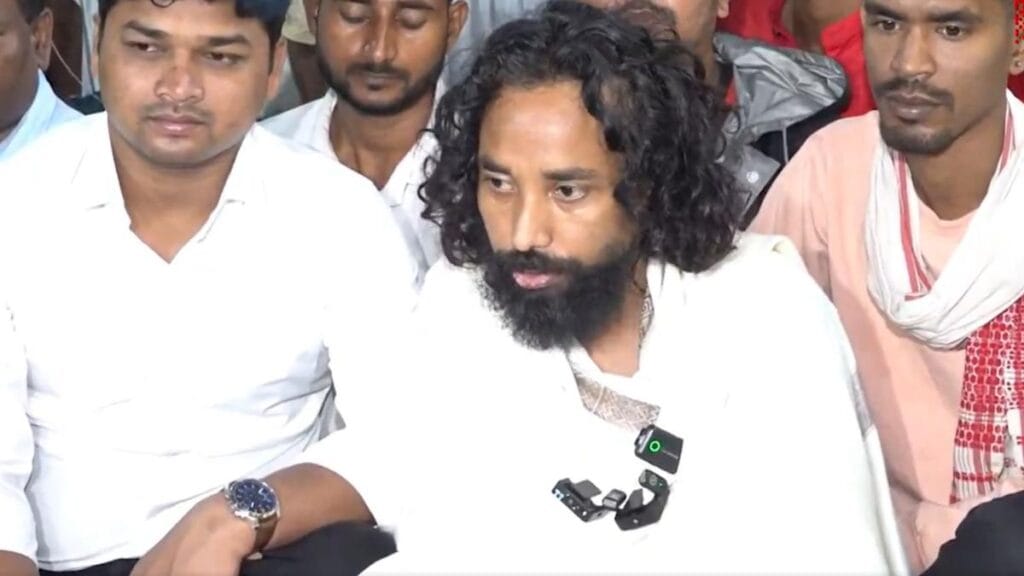
Student leader Devendra Nath Mahto addresses protesters in Ranchi after ending his 16-day hunger strike. Image Credit: The Hindu
Jharkhand student leader and Jharkhand Loktantrik Krantikari Morcha (JLKM) leader Devendra Nath Mahto has announced a second phase of the recruitment-exam protest, saying the movement will continue until the state government guarantees that future Jharkhand Public Service Commission (JPSC) and Jharkhand Staff Selection Commission (JSSC) examinations are free from paper leaks and irregularities.
Mahto ended his 16-day hunger strike after the Hemant Soren government cancelled the JSSC-Combined Graduate Level (JSSC-CGL) examination and all examinations, results, selections and recruitment processes linked to outsourced agency TSR Data Processing Private Limited (TDPL).
However, he made it clear that ending the fast does not mean ending the larger protest. “I have ended my hunger strike, not the protest,” Mahto said, calling the JSSC-CGL cancellation a “historic win” but insisting that lasting reform remains the real objective.
The development has created a complex new situation in Jharkhand: one group of aspirants sees the cancellation as a victory against alleged examination corruption, while around 2,000 candidates who cleared the JSSC-CGL examination and secured government jobs now fear losing their employment. Both sides are demanding a CBI probe, though for different reasons.
What Devendra Mahto Announced
Speaking after suspending his hunger strike, Mahto said the next stage of the movement would focus on creating a transparent, corruption-free and leak-proof recruitment system in Jharkhand.
His primary demand is no longer limited to cancelling disputed examinations. It is now about institutional reform—ensuring that future exams conducted by JPSC and JSSC are credible, secure and fair.
Mahto said the movement would continue until the government provides a clear guarantee that there will be no paper leak, manipulation or recruitment irregularity in future examinations.
Reports indicate that Mahto has also prepared a blueprint for reforming the state’s examination system. The proposed framework is expected to focus on stronger monitoring, accountability, technology safeguards and prevention of paper leaks. This story was also covered by The Hindu.
This marks a significant shift in the protest’s narrative. The first phase focused on immediate action—cancellation of JSSC-CGL and investigation into alleged irregularities. The proposed second phase is expected to focus on the long-term architecture of recruitment in Jharkhand.
Why the Hunger Strike Ended
Mahto and three other students ended their hunger strike after the government announced a series of measures during a special Cabinet meeting chaired by Chief Minister Hemant Soren.
The state government announced:
Cancellation of the JSSC-CGL examination
Cancellation of all examinations conducted through TDPL
Cancellation of TDPL-linked results, selections and recruitment actions
A comprehensive inquiry into JPSC and JSSC recruitment examinations held since 2014
A reform committee chaired by a senior IAS officer Amitabh Kaushal
A CID investigation into alleged examination irregularities
Mahto described the decision as a “historic win” for the students’ movement. The protest had continued for 24 days, while his own hunger strike lasted 16 days.
The decision to end the hunger strike was reportedly taken after discussions involving Jharkhand Health Minister Irfan Ansari, Minister Deepika Pandey Singh and MLA Jairam Mahto.
But the broader agitation remains active because students have not received an assurance on their demand for a Central Bureau of Investigation (CBI) inquiry.
CBI Probe Demand Remains Unresolved
The CBI investigation is still the most politically sensitive part of the protest.
The JPSC-JSSC Reform Forum and a section of student protesters argue that a state CID investigation is not sufficient because the alleged irregularities involve state institutions, outsourced agencies, officials, recruitment processes and potentially influential individuals.
Their position is that only an external, central investigation can create public confidence.
JPSC-JSSC Reform Forum spokesperson Ravindra Paswan said that although the government accepted an important demand by cancelling the examinations, it has not yet taken a decision on a CBI inquiry.
The government, meanwhile, has opted for a CID investigation covering recruitment examinations conducted since 2014. Whether this will satisfy the protesters remains uncertain.
The demand for a CBI probe has now gained a broader base because even selected candidates who face job loss after the JSSC-CGL cancellation are asking for an independent investigation.
Selected Candidates Fear Losing Jobs
The cancellation that brought relief to protesting aspirants has created anxiety for nearly 2,000 candidates who cleared the JSSC-CGL examination and were appointed to government jobs.
These selected candidates held a counter-protest outside the Jharkhand Secretariat in Ranchi, demanding that they should not lose their jobs without an individual assessment of wrongdoing.
Their central argument is that successful candidates cannot be presumed guilty merely because the examination has been cancelled. Many say they prepared honestly, cleared the test through merit and accepted appointments in good faith.
The candidates have said they are not against an investigation. In fact, they too are seeking a CBI probe and have indicated they are willing to face action if any individual is found guilty.
But they want a fair process.
“Tell us our crime” has become the emotional core of their protest, as selected candidates question why a blanket cancellation should erase their careers without identifying actual beneficiaries of any alleged malpractice.
The government now faces a difficult balancing act:
Address the concerns of aspirants who alleged irregularities
Ensure that innocent selected candidates are not unfairly punished
Conduct a credible investigation
Avoid prolonged legal battles that could delay recruitment further
Rebuild trust in JSSC and JPSC
How the Jharkhand Exam Protest Began
The current agitation began on July 25 at Ranchi’s Jaipal Singh Munda Stadium. Students and job aspirants alleged irregularities in recruitment examinations, particularly the JSSC-CGL exam and other JPSC-JSSC processes.
The protesters demanded:
Cancellation of allegedly compromised examinations
A CBI investigation into exam irregularities
Action against officials, middlemen and agencies involved in wrongdoing
Reforms to prevent paper leaks
Transparency in question-setting, evaluation, result publication and recruitment
The protest gradually intensified through sit-ins, hunger strikes, rallies and political pressure. The government’s cancellation decision came after 24 days of sustained agitation.
The wider controversy centres on TDPL, an outsourced agency linked to several recruitment-related processes. The government has said it will cancel all examinations conducted through the company and investigate related processes since 2014.
The scale of the decision is substantial. The Jharkhand government has released a list of 44 recruitment examinations that are being cancelled due to alleged irregularities, covering posts such as drug inspectors and civil judges, among others.
Also Read: Jharkhand Government Cancels JSSC-CGL Exam, All TDPL-Linked Tests After 24-Day Student Protest
Timeline
July 25, 2026: Students begin a protest at Jaipal Singh Munda Stadium in Ranchi over alleged irregularities in JPSC and JSSC recruitment examinations.
Early August: Devendra Nath Mahto begins a hunger strike, demanding cancellation of disputed exams, a CBI probe and reform of the recruitment system.
During the protest: The JPSC-JSSC Reform Forum raises questions over outsourcing, paper leaks, results and alleged irregularities connected to TDPL-linked processes.
August 18, 2026: Chief Minister Hemant Soren chairs a special Cabinet meeting and announces cancellation of JSSC-CGL and all TDPL-linked examinations, results, selections and recruitments.
After Cabinet decision: The Government announces a CID inquiry into recruitment examinations since 2014 and forms a reform committee under IAS officer Amitabh Kaushal.
August 18–19: Mahto ends his 16-day hunger strike, calling the cancellation a historic win but announcing a second phase of protest for corruption-free JPSC-JSSC recruitment.
Same period: Nearly 2,000 JSSC-CGL-selected candidates protest outside the Jharkhand Secretariat, fearing loss of government jobs and seeking a CBI probe.
Next phase: Protesters await the government’s decision on the CBI demand and details of the Kaushal committee’s reform blueprint.
Why This Matters
Yeh issue kaafi important hai because it affects the credibility of public recruitment, the careers of aspirants and the jobs of already selected candidates.
Youth employment: Government jobs are a major aspiration for young people in Jharkhand. Cancelled exams can mean years of additional preparation, financial strain and delayed careers.
Trust in institutions: JPSC and JSSC are supposed to conduct fair, merit-based recruitment. Allegations of paper leaks and irregularities can damage trust for years.
Selected candidates at risk: Around 2,000 appointed candidates now fear losing jobs despite claiming they cleared the examination honestly.
Demand for independent probe: Both groups now seek a CBI investigation, highlighting the depth of mistrust in the state-level process.
Impact beyond one exam: The cancellation of TDPL-linked tests since 2014 could affect multiple recruitment processes and create a major administrative and legal challenge.
This is not just a student protest. It is a test of whether a state can correct alleged examination failures without creating new injustice for honest candidates.
India Angle
Jharkhand’s situation reflects a wider India-wide crisis of confidence in competitive examinations.
Paper leaks, recruitment delays, outsourced agency disputes and court cases have affected students in several states. From Uttar Pradesh and Bihar to Rajasthan, Madhya Pradesh, Maharashtra and Haryana, job aspirants have repeatedly mobilised around exam transparency.
The reason is simple: for many Indian families, a government job represents economic security, social mobility and long-term stability. When recruitment exams are cancelled or questioned, the impact extends to entire households.
Jharkhand can now become a model—or a warning.
If the government creates a credible, transparent and fast reform system, other states may adopt similar safeguards. But if the process leads to prolonged litigation, delayed re-examinations and blanket punishment without accountability, it could deepen public distrust.
Future reforms should include:
Independent audit of examination vendors
Encryption and secure custody of question papers
Real-time monitoring of printing and transport
Mandatory background checks for outsourced agencies
Time-bound grievance redressal
Public disclosure of investigation outcomes
Protection for whistleblowers and student complainants
Clear legal safeguards for honest candidates
Paper leak sirf ek technical failure nahi hota—it affects the future of lakhs of young people.
Analysis
The key development is Mahto’s shift from protest as pressure to protest as reform. Cancelling an exam can address immediate anger, but it cannot by itself guarantee a clean system.
The second phase of the movement may be more difficult than the first. It is easier to demand cancellation than to design a fair, secure and workable recruitment architecture. But this is precisely where the protest can create lasting change.
At the same time, the counter-protest by selected candidates cannot be ignored. If the government treats all successful candidates as suspects, it risks replacing one injustice with another. A credible investigation must distinguish between systemic failure, individual wrongdoing and innocent beneficiaries of a flawed process.
In my view as a news writer, Jharkhand needs a three-part solution:
A genuinely independent and time-bound probe
Legal protection and fair hearings for selected candidates not linked to wrongdoing
A transparent, technology-backed recruitment reform plan
Without all three, the crisis will continue in different forms.
What Next
Several developments will determine the future of the agitation:
Second phase of protest: Devendra Mahto is expected to announce a detailed programme and present his blueprint for leak-proof, transparent recruitment.
CBI decision: The government will face continued pressure to accept or reject the demand for a CBI inquiry.
CID probe: The state CID will investigate recruitment examinations held since 2014, including potential links to TDPL.
Kaushal committee: The Amitabh Kaushal-led committee is expected to consult stakeholders and recommend examination reforms.
Legal challenge: Selected JSSC-CGL candidates may approach courts to protect appointments and seek individual assessment rather than blanket cancellation.
Re-examination roadmap: The government will need to explain which exams will be held again, when they will be conducted and whether candidates will receive age relaxation or fee waivers.
Public accountability: Protesters will likely demand that probe findings, action taken and reform timelines be made public.
Conclusion
Devendra Nath Mahto’s announcement makes one thing clear: the Jharkhand protest has not ended—it has changed direction.
The cancellation of JSSC-CGL and TDPL-linked examinations is a major victory for students who questioned the integrity of the recruitment process. But it is only the first step. The second phase now seeks a stronger promise: no paper leaks, no irregularities and no corruption in future JPSC and JSSC examinations.
At the same time, the government must respond to the concerns of selected candidates who fear losing jobs without proof of wrongdoing. Both sides now want a fair, credible investigation.
Jharkhand’s next challenge is not simply to hold another exam. It is to build a recruitment system that young people can trust. Mahto’s message sums it up: hunger strike khatam hui hai, lekin corruption-free recruitment ki ladai abhi khatam nahi hui.
Written By A. Jack