
The changes proposed would make tree protection a formal part of civic contracts, with accountability on the part of both contractors and executing departments. The move follows repeated claims that infrastructure work had damaged roots and weakened trees before the fatal collapse in Chembur.
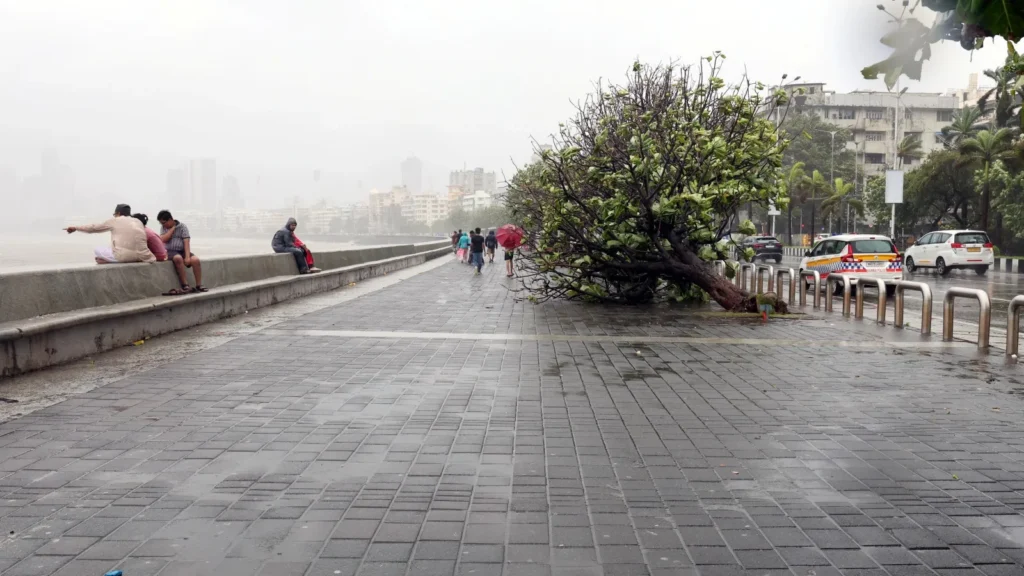
A fallen roadside tree in the Mumbai area, where the death of 11-year-old Vihaan Srivastava triggered demands for stronger tree protection rules. Image Credit: Indian Express
In the aftermath of the heartbreaking death of 11-year-old Vihaan Srivastava in a tree-fall incident in Chembur, the BMC is preparing sweeping changes aimed at protecting trees during civic works. An internal committee appointed by Municipal Commissioner Ashwini Bhide has reportedly recommended that all future infrastructure tenders include clear clauses making contractors and civic departments responsible for the care, protection and root safety of trees affected by construction. The report was submitted late on Thursday night to the office of an Additional Municipal Commissioner, according to civic sources.
This is a significant development because it moves the issue from post-tragedy sympathy to structural accountability. For years, Mumbai has seen trees weakened by roadworks, concrete covering root zones and poorly planned excavation. Now, the BMC appears ready to address that chain of failures more directly. Yeh issue kaafi important hai because it connects child safety, urban planning and civic responsibility in one painful but necessary conversation.
What the Committee Recommended
The committee’s main proposal is straightforward but powerful: contractors and executing departments should no longer treat trees as a side issue during infrastructure projects. Instead, tree protection should become a contractual obligation. That means if a road is dug up, widened or altered, the parties responsible for the work would also be responsible for safeguarding nearby trees, especially their root systems. This story was also covered by the IndianExpress.
This is a major shift in how city work is framed. Right now, in many urban projects, trees are often seen as obstacles that need to be worked around. The proposed reform suggests the opposite — that trees are part of the city’s living infrastructure and must be actively protected during construction. If implemented properly, such a rule could force better planning before work even begins.
The emphasis on root systems is especially important. Tree roots are often hidden underground, which makes them vulnerable to accidental damage during excavation, utility shifting and road widening. Once roots are cut or compressed, a tree may appear healthy on the outside while becoming structurally unstable beneath the surface. In a monsoon city like Mumbai, that can become deadly very quickly.
Why the Reform Came Now
The trigger for this committee was the fatal Chembur tree collapse that killed Vihaan Srivastava. His death has had a deep emotional impact on the city and has also exposed how tree safety failures can become life-threatening. Reports had already suggested that road construction on Road No. 11 may have damaged the tree roots, increasing the risk of collapse during the monsoon. Residents had also allegedly warned the civic body about the tree before the tragedy.
That combination — public warnings, construction-related stress and a fatal collapse — made the case impossible to ignore. The BMC has already suspended a garden department official pending inquiry, and this new committee report shows that the administration is now thinking beyond blame and toward prevention. It is one thing to respond after a tree falls. It is another to redesign civic systems so that dangerous conditions are less likely to develop in the first place.
The timing also matters because Mumbai is in the middle of monsoon season, when the risk of falling trees rises sharply. Wet soil, strong winds and damaged roots create a dangerous mix. If the city wants to reduce future casualties, reforms cannot wait until the next tragedy.
Background and Context
Mumbai’s relationship with its trees has always been complicated. On one side, the city relies on its green cover for shade, air quality and public space. On the other hand, rapid urban development often puts trees under pressure from road construction, widening projects and underground utility work. In many places, trees survive not because the system protects them, but because they are resilient enough to endure repeated stress.
Chembur became a flashpoint because the fatal incident appeared to combine all the worst elements: a vulnerable tree, a populated area, children nearby and the backdrop of construction work. That is why the committee’s recommendations matter beyond one location. They point to a broader need for Mumbai to treat trees as assets that require formal protection, not just decorative features on roadsides.
This is also part of a larger Indian urban challenge. Across the country, cities are expanding fast, but tree management policies often lag behind construction growth. If a project damages roots, there are usually few immediate consequences. That weak accountability is exactly what the new BMC proposal seems intended to correct.
What the Proposed Rules Could Change
If the committee’s recommendations are adopted, contractors may have to factor tree safety into the earliest stages of project planning. That could include mapping root zones before digging, creating protective barriers around trees, and adjusting road designs to avoid root damage wherever possible. Civic departments overseeing the work would also become accountable, which means responsibility would not stop with private contractors alone.
That kind of reform could also improve monitoring. If tree protection is written into the tender itself, then violations may be easier to track and penalise later. It would become part of the project’s legal and operational framework rather than a vague environmental concern. This is exactly the kind of change that urban governance often needs — a shift from reactive apologies to measurable prevention.
Another likely impact is better coordination between the garden department, road department and other civic units. In large municipal bodies, departments can sometimes work in silos. A road project may proceed without enough consultation about nearby trees. By making tree safety a formal shared responsibility, the BMC could reduce those gaps. That would be a practical improvement, not just a symbolic one.
Timeline
June 30: Vihaan Srivastava dies in a Chembur tree-fall incident.
Following days: Residents and internal reports indicate possible root damage from road construction.
After the tragedy: BMC appoints an internal committee under Municipal Commissioner Ashwini Bhide.
Thursday night: The committee submits its report recommending stronger tree protection rules.
Next stage: The report is expected to be examined by senior civic officials for possible adoption
Why This Matters
This matters because the cost of poor tree protection can be fatal. Vihaan Srivastava’s death is the most painful example, but the wider issue affects many Mumbai residents every monsoon. Falling trees can crush vehicles, injure pedestrians, block roads and create fear in neighbourhoods. When root damage goes unchecked, the city’s green cover turns into a public safety risk. Yeh matter isliye serious hai because it shows that urban negligence can have immediate human consequences.
It also matters because children, commuters and pedestrians are the people most exposed to roadside hazards. They do not control construction planning or civic maintenance, but they pay the price when those systems fail. If the BMC enforces stronger rules, it could save lives not only in Chembur but across the city.
There is also a trust dimension. Citizens often feel that warnings are ignored until something terrible happens. A reform like this can help rebuild trust if it is implemented honestly and consistently. People are more likely to believe in civic systems when they see that lessons from tragedy are being turned into action.
Also Read: Mumbai Monsoon Horror: 1,100 Trees Collapse in a Week as Rain and Wind Kill 3 People
India Angle
For Indian readers, Mumbai’s tree protection reform is a useful example of how cities should respond to urban safety failures. In Hinglish, seedhi baat yeh hai: agar construction se trees ka root damage hota hai aur phir tree gir jaata hai, toh system mein gap hai. Other Indian cities facing similar growth pressures — from road widening to metro construction to utility shifting — can learn from this.
The story is also relevant because monsoon-related tree falls are not just a Mumbai issue. Cities across India struggle with weak urban greenery management, poor excavation discipline and limited accountability. If BMC introduces stronger rules, it could set a benchmark for other municipal bodies. That would make this a local reform with national significance.
There is also a human angle that resonates broadly across India. The death of a child because of preventable civic failure hits people hard. It reminds everyone that urban policy is not abstract. It affects families, schoolchildren and ordinary people going about their day.
Analysis
My opinion is that the committee is moving in the right direction by focusing on accountability rather than just blame. The biggest problem in city governance is often that everyone agrees something went wrong, but no one is assigned responsibility early enough. By making contractors and executing departments directly responsible, the BMC is trying to close that gap. That is sensible and overdue.
I also think the emphasis on roots is the most technically important part of the proposal. Cities often focus on pruning branches or removing dangerous trees after the fact. But if the root zone is protected during construction, many future collapses could be prevented before they start. That is a smarter, more preventive model.
Still, the real test will be implementation. Policy language on paper is only as strong as enforcement on the ground. If the BMC does not monitor projects carefully or penalise violations, the reform may lose its impact. So the proposal is promising, but execution will decide whether it becomes a real safety measure or just another report.
What Next
The next step will be the BMC’s review of the committee report and the possible conversion of its recommendations into official policy. That may involve changing tender documents, creating inspection protocols and adding new accountability clauses for contractors and departments. If the civic body acts quickly, these changes could be introduced before future infrastructure projects move too far ahead.
There may also be more scrutiny of past works in Chembur and other parts of Mumbai where tree root damage has been reported. If the inquiry finds lapses, some officials or contractors could face further consequences. That would strengthen the message that tree safety is now a compliance matter, not just an environmental suggestion.
Residents will likely watch closely to see whether this leads to visible changes on the ground. If future roadwork sites begin using protective barriers and tree-sensitive planning, the reform will have substance. If not, public frustration may grow again.
Conclusion
Mumbai’s BMC is responding to the death of 11-year-old Vihaan Srivastava with a serious attempt to reform how the city protects its trees. The committee’s recommendation that contractors and civic departments be made responsible for tree roots during infrastructure work is a practical and necessary step toward preventing another tragedy. It recognises that roadside trees are not just part of the landscape — they are living structures that need planning, protection and accountability. If the proposal is implemented well, it could mark an important shift in how Mumbai balances development with safety.
Written By A. Jack