
Rudra Kadam declared dead at Malvani General Hospital after Malad West mishap; BMC prepares 100 beds as injury toll rises across city
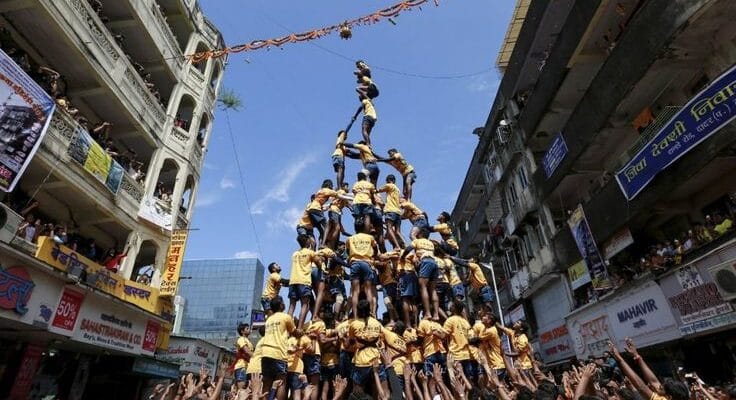
This image is only for illustrations.
What should have been a day of joyous celebration turned into a tragedy in Mumbai’s Malad West on Saturday, September 5, when a seven-year-old boy died during a local Dahi Handi celebration after a brick column collapsed on him, while at least 168 Govindas (Dahi Handi participants) were reported injured across the city during the Janmashtami festivities.
The deceased, identified as Rudra Kadam, was declared brought dead at Malvani General Hospital after the mishap occurred around 3 PM at Ekta Welfare Society in Chikuwadi, Malvani, off Marve Road. According to Brihanmumbai Municipal Corporation (BMC) officials, a group of children were celebrating Dahi Handi on their own when the rope used to tie the curd pot—secured between a tree and a brick column of a ground-floor structure—caused the column to collapse, striking Rudra on the head and causing severe injuries.
The incident has cast a shadow over the otherwise festive atmosphere, with BMC ward staff and police teams mobilized following the tragedy. Meanwhile, civic hospitals across Mumbai treated 168 injured Govindas by 9 PM on Saturday, with several undergoing treatment for fractures, sprains, and head injuries sustained during human pyramid collapses at various Dahi Handi events.
The Sequence of Events That Led to Tragedy
The fatal incident unfolded in a residential area of Malvani, where a group of children had organized their own Dahi Handi celebration without adult supervision or proper safety measures. According to preliminary information gathered by BMC officials, the children tied the rope holding the curd pot (handi) between a tree on one end and a brick column of a single-story structure on the other—a setup that proved fatally unstable. This story was also covered by The Hindu.
As the children attempted to break the handi by forming a human pyramid and striking the pot, the brick column—unable to bear the tension and weight—suddenly gave way and collapsed. The falling column struck seven-year-old Rudra Kadam directly on the head, causing catastrophic injuries.
“The incident took place at Ekta Welfare Society, Room No. 23, Chikuwadi, Malvani, Marve Road, at around 3 PM,” a BMC statement read. According to officials, children were celebrating Dahi Handi on their own, with the rope tied between a tree and a brick column of a ground-floor structure. During the activity, the column collapsed, causing a head injury to the child.
Rudra was immediately rushed to Malvani General Hospital, but doctors declared him brought dead, indicating the severity of the head trauma. Ward staff and police teams were mobilized following the incident, and further investigations are underway to determine if any negligence or safety violations occurred.
Official Statements and BMC Response
In a statement released on Friday, September 4, the BMC said it had prepared 100 beds at civic hospitals across the city and suburbs specifically for treating injured Govindas during Dahi Handi celebrations. The civic body also deployed medical teams at major celebration sites and issued advisories to organizers about safety protocols.
“As many as 168 Govindas were reported injured during Dahi Handi celebrations across Mumbai till 9 PM on Saturday, according to information received from various government and BMC hospitals,” a BMC official said. “Of these, 80 are undergoing treatment, while 33 have been discharged. Four injured persons have been admitted with serious injuries.”
On the Malad tragedy, the BMC statement said, “The fatal incident was reported around 3:01 PM at Ekta Welfare Society in Chikuwadi, Malvani, off Marve Road. While the children were attempting to break the handi, the brick column collapsed, hitting a seven-year-old boy, identified as Rudra Kadam, and causing severe head injuries. The boy was immediately rushed to Malvani General Hospital, where doctors declared him brought dead.”
Police have registered a case of accidental death and are investigating whether proper permissions were obtained for the celebration and if safety norms were followed.
Dahi Handi Celebrations and Safety Concerns
Dahi Handi is an integral part of the Janmashtami festivities, marking the birth of Lord Krishna. The celebration reenacts the playful antics of young Krishna, who would steal curd and butter with his friends. Devotees form human pyramids—sometimes as high as 10 tiers—to break earthen pots filled with curd, suspended at considerable heights.
While the festival is a display of devotion, teamwork, and athleticism, it carries inherent risks. During attempts to break the pots, troupes of Govindas often collapse, leading to injuries ranging from minor sprains to serious fractures and head trauma. In recent years, there have been multiple incidents of fatalities and serious injuries during Dahi Handi celebrations across Maharashtra.
The BMC typically issues guidelines ahead of Janmashtami, including:
Height restrictions: Limiting human pyramid heights to prevent dangerous falls.
Safety equipment: Mandating helmets, mats, and spotters for participants.
Adult supervision: Requiring registered organizers and trained supervisors at events.
Medical preparedness: Deploying ambulances and medical teams at major celebration sites.
However, enforcement remains challenging, especially for small, neighborhood-level celebrations like the one in Malvani where Rudra lost his life.
From Celebration to Tragedy
September 4, 2026 (Friday): BMC announces preparation of 100 beds at civic hospitals for injured Govindas; issues safety advisories to Dahi Handi organizers.
September 5, 2026, 3:00 PM (approx.): A Group of children gather at Ekta Welfare Society, Chikuwadi, Malvani, for a Dahi Handi celebration; ropes are tied between a tree and a brick column.
3:01 PM: Brick column collapses as children attempt to break handi; Rudra Kadam, 7, struck on head; immediately rushed to Malvani General Hospital.
3:15–3:30 PM (approx.): Doctors declare Rudra brought dead; BMC ward staff and police mobilized; investigation initiated.
Throughout Saturday: Dahi Handi celebrations continue across Mumbai; 168 Govindas reported injured; 80 are undergoing treatment, and 33 are discharged by 9 PM.
September 6 (Sunday): BMC releases updated injury toll; police continue investigation into Malad death; family mourns loss of Rudra.
Why This Matters
Yeh issue kaafi important hai for multiple reasons. First, it highlights the vulnerability of children during festive celebrations, especially when adult supervision is absent. Rudra and his friends were celebrating “on their own”—without registered organizers, safety equipment, or proper structural support for the handi. This is not uncommon in Mumbai’s dense neighborhoods, where children organize small-scale celebrations independently.
Second, the incident raises questions about infrastructure safety in residential areas. A brick column of a ground-floor structure should not collapse from the tension of a rope tied to it—unless the structure was already weak, poorly constructed, or overloaded. This points to broader issues of building safety, especially in older neighborhoods like Malvani.
Third, the death of a child during a religious festival is emotionally devastating for families and communities. Janmashtami is supposed to be a celebration of life and devotion—not a day of mourning. When festivities turn fatal, it shakes faith in safety protocols and governance.
For Mumbai—a city that hosts some of the largest and most elaborate Dahi Handi celebrations in India—this tragedy is a wake-up call. With over 168 injuries reported in a single day, the human cost of inadequate safety measures is clear.
India Angle
For readers across India, yeh sirf Mumbai ki kahani nahi hai—yeh ek national concern ban chuka hai. From Ganpati immersions in Maharashtra to Ramlila processions in Uttar Pradesh, from Durga Puja pandals in West Bengal to Diwali firecracker accidents across the country, festival-related deaths and injuries are tragically common.
Agar aapko lagta hai ki yeh issue sirf Dahi Handi tak limited hai, toh sochiye dobara. Every year, dozens of Indians die during religious celebrations due to stampedes, structural collapses, fire accidents, and inadequate crowd management. The Supreme Court and National Disaster Management Authority (NDMA) have issued guidelines repeatedly, but enforcement remains weak at the ground level.
The child safety angle is particularly concerning. Children are naturally drawn to festivals—they love the energy, the crowds, and the excitement. But they lack the judgment to assess risks. When adults are absent or distracted, accidents happen.
Culturally, there’s also a tendency to treat festivals as exceptions to safety rules. “It’s just one day,” people say. “We’ve always done it this way.” But tradition should never come at the cost of life.
Analysis
The lack of adult supervision is the root cause. Children should never be organizing Dahi Handi celebrations on their own, especially with improvised setups like tying ropes to brick columns. Registered organizers would have used proper stands, safety mats, and spotters.
Building safety is a silent crisis. A brick column collapsing from rope tension suggests structural weakness. In a city prone to monsoon damage and aging infrastructure, how many such weak structures exist in residential areas?
BMC’s preparedness was adequate—but prevention is better than cure. Having 100 beds ready is good, but preventing injuries in the first place is better. This requires proactive enforcement: checking setups before celebrations, mandating safety equipment, and penalizing violations.
Community awareness is missing. Parents need to know the risks. Children need to be taught safety. Neighborhood associations should coordinate with BMC to ensure safe celebrations.
What Next
In the immediate term (next 7–14 days):
Police investigation: Authorities will determine if negligence occurred, whether proper permissions were obtained, and if any individuals can be held criminally liable.
Post-mortem and inquest: Rudra’s body will undergo post-mortem examination; a magisterial inquest may be ordered given the nature of the death.
Family compensation: BMC or the state government may announce ex-gratia compensation for the family, though no official announcement has been made as of Sunday.
Safety audit: BMC may conduct spot checks of Dahi Handi setups in high-risk areas, especially in older neighborhoods.
Longer-term (weeks to months):
Policy review: BMC may revise Dahi Handi guidelines, including stricter rules on structural supports, mandatory adult supervision for children’s events, and enhanced penalties for violations.
Public awareness campaign: Civic bodies may launch campaigns educating parents and children about festival safety, especially for independently organized celebrations.
Building safety inspection: Following the column collapse, BMC may initiate inspections of older structures in Malvani and similar neighborhoods to identify structural weaknesses.
Community engagement: Local ward offices may work with resident associations to ensure safe, supervised celebrations in future years.
For parents and communities, the advice is clear:
Supervise children: Never allow children to organize Dahi Handi or similar events without adult oversight.
Use proper equipment: Avoid tying ropes to trees, columns, or unstable structures; use certified stands and supports.
Register events: Coordinate with local BMC ward offices or police for permissions and safety support.
Prioritize safety over tradition: If a setup looks risky, don’t proceed—no celebration is worth a life.
Final Thoughts
Rudra Kadam’s death is more than a statistic—it’s a tragedy that should never have happened. A seven-year-old boy, full of life and excitement for a festival he loved, went in an instant because of a preventable accident.
The 168 injured Govindas across Mumbai are a reminder that this was not an isolated incident. Every injury represents pain, medical bills, lost school days, and anxious families. And behind each number is a story—of a fall from a pyramid, a collision, or a structural failure.
Festivals are meant to bring joy, not grief. Devotion should never demand such a high price. Rudra’s family will carry this loss forever. The question is, will Mumbai learn from this?
Will parents supervise more carefully? Will organizers prioritize safety over spectacle? Will authorities enforce rules more strictly?
If the answer is yes, then perhaps Rudra’s death will not be in vain. If the answer is no, then next year, another child may pay the price.
Written By A. Jack