
Kalyan shoppers record rat inside freezer; Maharashtra FDA had just suspended 14 quick-commerce licences over hygiene violations across the state.
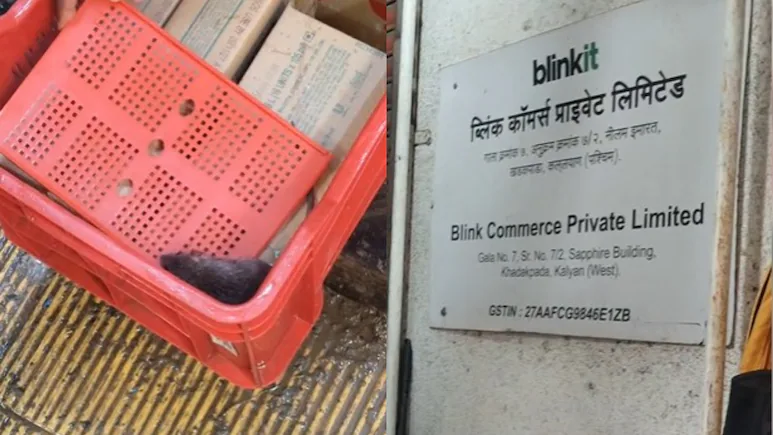
A rat was allegedly spotted running inside an ice cream freezer at a Blinkit outlet in Kalyan’s Godrej Hill area, Thane. Image Credit: NDTV
In a fresh blow to consumer trust in quick-commerce food delivery, a rat was allegedly spotted running inside an ice cream freezer at a Blinkit store in Kalyan’s Godrej Hill area in the Thane district, Maharashtra. The incident came to light when a group of youngsters visited the store to buy ice cream and were shocked to see the rodent moving around packaged products inside the freezer compartment.
The customers recorded videos of the incident on their mobile phones, and the footage quickly went viral on social media, triggering outrage among local residents and renewed demands for strict action from the Maharashtra Food and Drug Administration (FDA). The episode comes just days after the FDA suspended the licences of 14 establishments linked to quick-commerce platforms—including Blinkit, Zepto and Instamart—following a state-wide inspection drive that uncovered serious hygiene and food-safety violations.
Why and How the Incident Unfolded
According to reports, the youngsters entered the Blinkit outlet to purchase ice cream from a self-service freezer stocked with packaged products. While browsing, they noticed a rat running inside the freezer, in close proximity to the food items meant for human consumption. Recognising the potential health risk, they immediately recorded videos on their phones, which later fuelled public anger and calls for regulatory intervention.
While the exact cause of the infestation has not been officially confirmed, food-safety experts point to common lapses in quick-commerce “dark stores”: inadequate pest control, poor sealing of entry points, improper waste disposal, and irregular cleaning of cold-storage units. In high-density urban and semi-urban areas like Kalyan-Thane, rodent pressure is already high; without rigorous housekeeping and pest-management protocols, freezers and storage rooms can quickly become vulnerable. This story was also covered by NDTV.
The timing is critical. The Maharashtra FDA has been conducting a concerted crackdown on quick-commerce facilities across the state, inspecting 86 establishments involved in the storage, sale, and delivery of food through online platforms. Of these, 14 licences were suspended—five linked to Blinkit, five to Zepto, and two to Instamart—while 60 improvement notices were issued and operations at one facility were temporarily suspended.
Statements and Reactions
Local residents and customers:
Social media posts and local reports indicate strong anger among Kalyan-Thane residents, with many demanding immediate sealing of the outlet, a thorough FDA probe, and penal action against the franchise or operator. “Agar ice cream freezer mein chūha ghoom sakta hai, toh aur kya guarantee hai ki khana safe hai?” one viral comment read, capturing the broader anxiety.
FDA’s wider drive:
While a specific statement on the Kalyan incident was still emerging, the FDA’s recent inspection findings elsewhere provide a clear picture of the violations it is targeting: pest infestations (cockroaches, rodents), temperature-control failures, expired or damaged stock, poor housekeeping, and lack of protective gear for food handlers.
Industry context:
Quick-commerce brands have repeatedly emphasised their investment in technology-driven cold chains, real-time temperature monitoring, and standardised operating procedures. However, the sheer pace of expansion, reliance on third-party operators, and pressure to maintain 10–20 minute delivery windows can sometimes lead to corners being cut on hygiene and maintenance, according to food-safety auditors.
Maharashtra FDA’s Crackdown on Quick-Commerce
The Kalyan rat incident is not isolated; it fits into a broader pattern of food-safety concerns around quick-commerce “dark stores” in Maharashtra. In early to mid-August 2026, the FDA inspected 86 establishments across the state and found multiple violations, leading to the suspension of 14 licences.
Key findings from FDA inspections included:
Blinkit, Ghatkopar (Mumbai): Inadequate drainage and waste disposal, temperature-control issues for frozen products, unprotected lighting in unpacked-food storage, poor housekeeping, damaged ceilings and flooring, and improper segregation of food items. The facility scored 34/74 (46%) and was classified non-compliant.
Blinkit, Malad West (Mumbai): Chiller room operating at 6°C (above prescribed limits), inability to produce medical examination records for around 40 food handlers, workers without basic protective gear (gloves, aprons, headgear), cockroach infestation, expired and tampered products, and food stored on rusted racks. The FSSAI licence was suspended with immediate effect.
Zepto and Instamart outlets: Similar violations, including temperature-control failures in frozen storage, expired products, poor hygiene, and pest infestations, leading to licence suspensions in multiple locations, including a Zepto outlet in Lohegaon, Pune.
The inspections focused on storage conditions, temperature control, cleanliness, pest management, personal hygiene of food handlers, food-safety records, display of licences, and compliance with inventory practices such as FIFO (First In, First Out) and FEFO (First Expired, First Out).
Timeline
August 7, 2026: FDA inspects Blinkit facility in Malad West, Mumbai; finds cockroach infestation, temperature violations, expired stock, and hygiene lapses; licence suspended.
August 13, 2026: FDA inspects 86 quick-commerce establishments across Maharashtra; issues 60 improvement notices; suspends 14 licences (5 Blinkit, 5 Zepto, 2 Instamart, plus others).
Mid-August 2026 (exact date emerging): A Group of youngsters spots a rat inside an ice cream freezer at a Blinkit store in Kalyan’s Godrej Hill area, Thane; videos are recorded and shared online.
August 15–16, 2026: Footage goes viral; local residents demand FDA action; media highlights pattern of violations across quick-commerce facilities in Mumbai-Thane-Pune.
Also Read: Domino’s Pizza Licence Suspended at 3 Mumbai Outlets Over FDA Hygiene Violations
Health, Trust, and the Quick-Commerce Model
Yeh issue kaafi important hai kyunki yeh seedha asar pad raha hai public health, consumer trust, aur pure quick-commerce industry ki credibility par.
Public health risk: Rodents are known carriers of pathogens that can contaminate food and surfaces, increasing the risk of foodborne illnesses. A rat inside a freezer used for packaged ice cream is a serious red flag.
Consumer trust: Quick commerce thrives on convenience and perceived reliability. Repeated hygiene scandals—cockroaches, expired food, now a rat—can erode trust and push customers back to traditional retail.
Regulatory pressure: The FDA’s aggressive stance signals that violations will be punished, but the recurrence of incidents suggests that compliance may be uneven across franchises and dark stores.
Industry growing pains: Rapid expansion, high delivery-speed expectations, and complex supply chains can strain hygiene protocols if not matched with equally rapid investment in training, audits, and infrastructure.
India Angle
This is not just a Mumbai-Thane story; it’s an India-wide quick-commerce moment.
Urban pest pressure: In dense Indian cities, rodent and insect control is already a challenge. Dark stores located in mixed-use buildings or near markets need extra vigilance on sealing, waste management, and pest control.
Regulatory template: Maharashtra’s FDA drive could become a template for other states—Karnataka, Tamil Nadu, and Delhi-NCR—where quick-commerce has expanded rapidly.
Consumer awareness: Indian consumers are increasingly vocal on social media about food-safety lapses. Viral videos like the Kalyan freezer incident can force faster regulatory action and corporate course correction.
Agar yeh trend continue hua, toh har metro city mein similar inspections aur penalties dekhne ko mil sakti hain—aur platforms ko apne dark stores ki hygiene par zyada invest karna padega.
Analysis
But beyond search, the narrative is strategically significant:
Pattern, not one-off: The Kalyan incident is the latest in a series of FDA actions against quick-commerce facilities. Together, they suggest systemic issues rather than isolated lapses.
Brand vs franchise gap: While corporate brands emphasise standards, many dark stores operate via third-party franchises or partners. Ensuring uniform compliance across all outlets is the real challenge.
Regulatory credibility: The FDA’s visible crackdown boosts its image as an active regulator, but sustained impact will depend on follow-up inspections, penalties, and transparency.
For follow-ups, newsrooms can track specific action on the Kalyan outlet, internal audits by Blinkit and peers, and whether other states launch similar drives.
What Next
Immediate action on Kalyan outlet: Expect the FDA to inspect the Godrej Hill Blinkit store, possibly suspend its licence if violations are confirmed, and initiate penal proceedings under food-safety laws.
State-wide intensified inspections: Following the viral video, the FDA may expand its inspection drive to more dark stores in Thane, Kalyan, Navi Mumbai, and Pune, with a focus on cold storage and pest control.
Corporate response: Blinkit and other platforms are likely to issue statements reaffirming their commitment to food safety, announce internal audits, and possibly suspend or terminate partnerships with non-compliant outlets.
Long-term reforms: The episode could push regulators and industry toward stricter norms: mandatory third-party audits, real-time temperature logging, public display of inspection scores, and harsher penalties for repeat offenders.
Conclusion
The sighting of a rat inside a Blinkit ice cream freezer in Kalyan, Thane, is more than a shocking viral moment; it is a stress test for India’s quick-commerce model. Coming right after the Maharashtra FDA suspended 14 licences linked to Blinkit, Zepto, and Instamart over hygiene and food-safety violations, the incident underscores how quickly convenience can turn into controversy when basic standards slip.
For consumers, the message is clear: convenience must not come at the cost of safety. For platforms, the lesson is equally stark: rapid growth must be matched by equally rapid investment in hygiene, training, and oversight.
Ab dekhna yeh hai ki kya yeh incident sirf ek aur headline ban kar reh jaata hai, ya sach mein ek turning point banta hai—jahan regulators, companies, aur customers milkar food safety ko priority banate hain.
Written By A. Jack